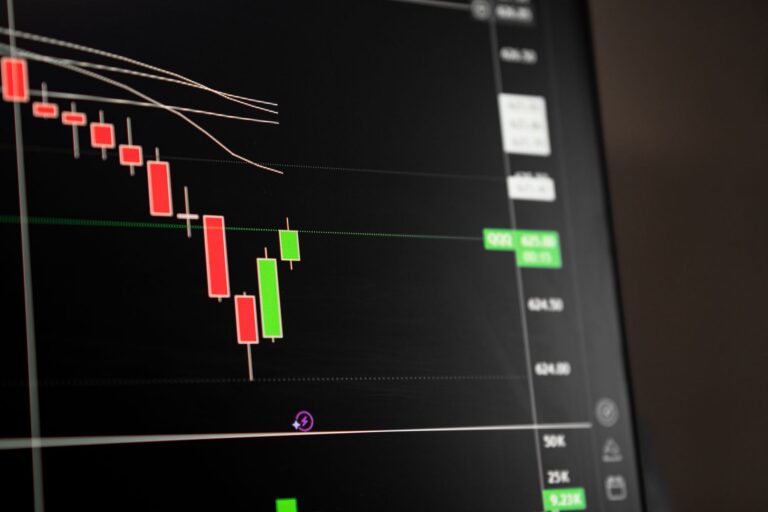

Gold is trading at $4,172.90, down 1.7% on the session, and the break under $4,200 gives this XAU USD analysis a clean starting point: sellers have control until proven otherwise. The move is happening with the US Dollar Index only near 100.76, so I’m not treating this as a simple dollar squeeze. The pressure is coming from rates, positioning, and a weaker haven bid while equities stay bid.
For traders tracking broader cross-asset flows, this belongs beside the day’s more market analysis, because gold is acting less like a panic hedge and more like a duration-sensitive asset. That matters. When gold falls while stocks rise and yields remain elevated, the tape is telling us where the real stress point sits.
Gold Price Today: XAU/USD Trades Below $4,200
$4,172.90 Spot Price, Down 1.7% Intraday
The gold price today is $4,172.90, putting XAU/USD below the $4,200 handle after a sharp intraday slide. A 1.7% drop is meaningful for gold at these levels. It is not noise. It is enough to change short-term bias, force late longs to reassess, and invite momentum sellers to press into the next pocket of liquidity.
The cleanest read is that $4,200 has shifted from support into a decision level. While price holds below it, rallies into that zone deserve suspicion. Gold can bounce from oversold intraday conditions, but a bounce and a bullish reversal are different trades. I care about acceptance, not a wick.
Largest Allowed Non-Index Move On The Board
Gold is the dominant downside move among the major non-index assets in this snapshot. WTI crude is higher at $77.54, Bitcoin is firmer at $63,587, and Ethereum is up at $1,725. Gold is the one taking the macro hit.
That contrast matters because it removes one easy excuse. This is not a broad liquidation across every risk asset. The Nasdaq Composite is up 1.9%, the S&P 500 is up 1.1%, and even crypto is catching a bid. Gold weakness is more specific. The market is punishing non-yielding duration exposure while risk appetite is still alive elsewhere.
Why This XAU USD Analysis Treats $4,200 As Near-Term Bias
The $4,200 handle now defines the first battlefield. Above it, shorts lose the clean structure and the market starts to look like a failed breakdown. Below it, sellers can keep leaning on lower highs and pressure the $4,160 to $4,150 area.
I have traded enough gold impulse breaks to respect round-number failures. Gold often trades dramatically around obvious levels because liquidity collects there. Stops, breakout orders, hedges, and options-related flows all cluster around the same clean number. Once the market rejects that number, the next move can travel faster than traders expect.
My opinion: below $4,200, gold is guilty until it proves strength through acceptance back above the handle. A quick wick is not enough.
Why Is Gold Falling If DXY Is Only Near 100.76?
DXY Firm, Not Exploding: Dollar Is Not The Whole Story
The US Dollar Index is near 100.76, down slightly by about 0.1%. That is firm in a broad sense, but it is not a runaway dollar rally. EUR/USD is around 1.1468, GBP/USD is near 1.3232, and USD/JPY is sitting close to 161.28. The currency board is not screaming dollar panic.
That makes the gold move more interesting. A falling gold market with a flat-to-soft DXY points traders toward the rates channel. Dollar strength can still add pressure later, but the present selloff is better explained by yields and Fed repricing.
Real-Rate Pressure Is The Cleaner Macro Driver
Gold does not pay interest. That sounds basic, but it is the center of the trade. When investors can earn more from cash, Treasuries, or short-duration instruments, gold has to justify its place through fear, inflation protection, central-bank demand, or momentum. Right now, fear is muted and momentum has turned lower.
The result is a cleaner real-rate story. Treasury yields remain high enough to keep opportunity cost alive, while inflation expectations are not providing the kind of explosive tailwind that would overpower rates. In that environment, gold becomes vulnerable when it loses a major level like $4,200.
How Does A Hawkish Fed Pressure Gold?
Fed Holds 3.50% To 3.75% But Keeps A Hawkish Bias
The Fed holding rates at 3.50% to 3.75% is not automatically bullish for gold. A hold can still be restrictive when the message around it stays hawkish. The market cares about the forward path, not only the current setting.
That is the core of the hawkish Fed gold problem. Gold bulls want a clear path toward easier policy, lower real yields, and softer financial conditions. Instead, the market is dealing with a Fed that is not eager to validate aggressive easing expectations. Kitco reported that hawkish Fed pressure and softer physical premiums were weighing on gold, which lines up with the price action on the board.
Markets Reprice Toward Possible 2026 Hike Risk
The bearish twist is not just that cuts may be delayed. The market is also considering the risk that policy could stay restrictive for longer, with potential 2026 hike risk entering the conversation. Gold does not need an actual hike today to feel that pressure. It only needs expectations to shift enough that future real yields look less friendly.
That repricing can hit gold quickly because long exposure often builds around the assumption that central banks are closer to easing than tightening. When that assumption weakens, leveraged longs get less patient. The $4,200 break reflects that loss of patience.
Higher Expected Real Yields Weigh On Non-Yielding Metals
Gold competes against yield. Silver, platinum, and other metals have their own industrial demand stories, but gold is still heavily tied to the real-rate structure. Higher expected real yields reduce the appeal of holding a non-yielding store of value unless investors urgently need protection.
At the moment, urgency is limited. VIX is only 16.78, up 2.3% but still not signaling disorder. Equities are green. Crypto is green. The market is mixed, not panicked. That leaves gold exposed to the rate side of the ledger.
Treasury Yields Gold Pressure: 10-Year Near 4.455%
Why 4.46% Yields Raise Opportunity Cost
The US 10-year Treasury yield is near 4.455%, close enough to 4.46% to keep pressure on gold. That is the treasury yields gold relationship in plain terms: when benchmark yields sit high, gold has to fight harder for capital.
A 4.455% 10-year yield gives investors an alternative. It does not mean everyone dumps gold, but it changes the hurdle rate. Portfolio managers can hold Treasuries and get income. Gold has to offer price appreciation, protection, or both. During a session where gold is already down 1.7%, that argument gets weaker.
There is also a psychological component. Traders see yields elevated and assume rallies in gold will be sold until the rates chart says otherwise. That expectation can become self-reinforcing around broken support.
What Falling Yield Momentum Would Need To Change
For gold bulls, the first macro improvement would be softer yield momentum. The 10-year does not need to collapse, but it needs to stop acting like a ceiling on gold rallies. A pullback in real yields, a dovish shift in Fed language, or softer inflation-adjusted rate expectations would help.
Geopolitics can also change the tone, but current haven demand is not strong enough to offset the rates drag. Regional risk remains on the radar, including reports that US-Iran nuclear talks were delayed as regional tensions persisted. Even so, the gold tape is saying investors are not paying a major fear premium right now.
What Is The Gold SMC Setup Below $4,200?
Failed Liquidity Run Leaves Sellers Defending Premium
From a Smart Money Concepts lens, the failed hold above $4,200 looks like a liquidity grab that did not attract enough continuation demand. Price moved through an obvious area, trapped breakout buyers, then rotated lower. That is the kind of sequence I take seriously because it often marks distribution rather than accumulation.
For traders refining a gold SMC setup, the key is where sellers defend premium. The closest premium zone sits back toward $4,200. A lower-timeframe rally into that area can offer information. Weak candles, poor follow-through, or aggressive rejection would show that supply still owns the level.
Readers who want the framework behind that read can review our archive of SMC trading strategies. The core idea is simple: identify where liquidity was taken, where displacement followed, and where price should not return if the move is genuine.
Bearish Acceptance Zone: $4,160 To $4,150
The next important downside area is roughly $4,160 to $4,150. I am treating that as the first bearish acceptance zone, not as a guaranteed target. Acceptance means price spends time below the area, rejects attempts to reclaim it, and builds structure underneath.
A clean break and hold below $4,150 would shift attention toward lower liquidity pools. That could include prior intraday lows, resting sell-side liquidity, and any imbalance left from the prior advance. The move does not need to be vertical. In fact, controlled selling is often healthier for continuation than a panic candle that immediately snaps back.
Reclaiming $4,200 Warns Shorts Are Late
A sustained recapture of $4,200 would change the conversation. Late shorts would be sitting below a reclaimed round number, and that can create fuel for a squeeze. The warning sign would be price accepting above $4,200 after a failed push lower into $4,160 to $4,150.
That would not automatically create a long-term bullish reversal, but it would damage the immediate bearish case. Shorts want rejection under $4,200. Bulls want time and volume back above it. Everything else is intraday noise until one side forces acceptance.
XAU USD Forecast: Bearish Continuation Or Trap?
Bear Case: Acceptance Below $4,160 To $4,150
The bearish XAU USD forecast is straightforward. Gold remains below $4,200, rallies are sold, and price accepts below $4,160 to $4,150. That would confirm that the market is not simply flushing weak hands but actually repricing lower.
In that case, the next downside objective would be the nearest visible liquidity below the current range. I would expect traders to watch for sell-side pools under recent lows, especially if yields stay elevated and DXY stops drifting lower. Bearish continuation becomes cleaner when macro pressure and market structure agree.
Invalidation Warning: Sustained Reclaim Of $4,200
The main invalidation warning is a sustained reclaim of $4,200. I want to see more than a headline pop or one aggressive candle. Price needs to hold above the level, build support, and deny sellers a clean re-entry.
If that happens, the breakdown starts to look like a trap. Shorts who sold into discount would be forced to cover, and gold could rotate back toward the nearest premium supply zones. The better trade would then be patience, because chasing the middle of a reclaim often produces poor risk-to-reward.
Mixed Risk Tone: Nasdaq +1.9%, S&P 500 +1.1%, VIX 16.78
The risk tone is mixed but not defensive enough to rescue gold. Nasdaq strength near 1.9% and S&P 500 gains around 1.1% point to a market still willing to own growth exposure. The Dow is barely positive at 51,565, up 0.1%, which gives the session some unevenness, but there is no broad equity panic.
That matters for haven demand. VIX at 16.78 is higher on the day, yet it is not at a level that screams forced hedging. Gold thrives when investors want protection and rates are falling. Today, investors are showing enough risk appetite to limit haven flows while yields remain restrictive.
For equity context, the current setup pairs well with our Dow Jones risk-on analysis, because the same market that is lifting indexes is refusing to reward gold. That divergence is the whole trade.
Oil strength also deserves a quick mention. WTI at $77.54, up 1.2%, can keep inflation worries alive around the edges. Our recent WTI crude oil analysis covered how energy shocks can shift macro expectations quickly. For gold, higher oil is only bullish when inflation fear beats the yield response. Right now, the yield response is winning.
FAQ
Why is gold price today falling?
Gold is falling because the rates backdrop is restrictive. The Fed held at 3.50% to 3.75%, but hawkish messaging and 10-year Treasury yields near 4.46% keep real-rate pressure on non-yielding gold while haven demand looks limited and equities are relatively firm today.
Is gold weakness mainly a dollar story?
Not today. DXY around 100.76 is firm but not surging, so the cleaner explanation is real-rate pressure from Treasury yields and hawkish Fed repricing. A stronger dollar would intensify the bearish case, but current weakness is more yield-led than dollar-led today.
What levels matter for the xau usd forecast?
The first risk marker is the $4,200 handle. While price trades below it, sellers can defend the nearest premium zone. A cleaner bearish continuation needs acceptance below roughly $4,160 to $4,150, while reclaiming $4,200 warns that shorts are late into discount territory.
How does SMC read the gold move?
From a gold SMC setup perspective, the failed hold above $4,200 suggests an upside liquidity run did not attract sustained demand. Bears have control unless price reclaims that handle; acceptance below $4,160 to $4,150 would favor continuation toward lower liquidity pools next.
Can risk-on equities limit gold haven demand?
Yes. Nasdaq strength near 1.9% and S&P 500 gains around 1.1% reduce immediate haven urgency, especially with VIX near 16.78. That does not remove macro risk, but it makes gold more sensitive to yields than fear flows today in this session.
My forward read is simple: below $4,200, gold remains vulnerable, but the next real answer comes from how price behaves around $4,160 to $4,150. Does the market accept lower, or did sellers arrive late?
Disclaimer: This article is for educational market commentary only and is not financial advice. Trade your own plan and manage risk carefully.