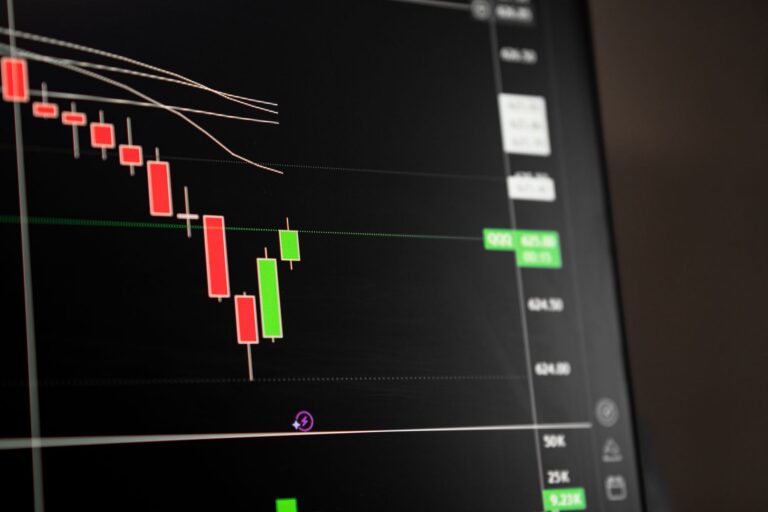
The Dow is trading at 51,202, up 0.7% intraday, while WTI crude is getting hit and the VIX is down hard. That combination matters. My Dow Jones analysis starts with one simple read: capital is rotating into equities while energy risk cools, but price is already pressing a liquidity area where sloppy breakout entries can get punished.
Dow Jones Analysis: Why Is the Dow Leading Today?
Dow Jones is trading at 51,202, up 0.7% intraday, making it the strongest mover among today’s non-commodity assets.
The Dow Jones Industrial Average is outperforming the S&P 500 and Nasdaq Composite, with price sitting near 51,202. That is the strongest move across the major U.S. equity indexes in this snapshot, excluding commodities like gold, which is up 3.1%, and crude oil, which is down 3.9%.
I care about that relative strength because the Dow is usually less forgiving than tech when growth appetite fades. When industrials lead while volatility drops, the tape is sending a risk-positive message. Still, leadership alone is not an entry signal. It tells me where attention is going, not where risk is clean.
Risk-on rotation favors industrials as falling energy prices and lower volatility improve equity sentiment.
The backdrop is clearly equity-friendly. WTI crude is trading at $84.29, down 3.9%, while the CBOE Volatility Index is at 17.68, down 9.1%. That is a strong combination for cyclical names, transports, manufacturers, and other Dow components sensitive to fuel costs and margin pressure.
Investopedia also noted that U.S. indexes finished higher while oil fell on hopes around an imminent U.S.-Iran peace deal, a headline mix that supports the current risk bid across equities. You can read their broader market recap here: Stock Market Today: Indexes Close Higher as Oil Falls.
Dow strength should be judged against liquidity location, not just headline index performance.
The Dow Jones price is pressing the 51,200 area, which is exactly where I expect short-term breakout interest and buy-side liquidity to cluster. That matters more than the percentage gain. A 0.7% rally into clean liquidity can either expand into continuation or become a stop-run that fades once aggressive longs are trapped.
From a Smart Money Concepts lens, I want to see whether price accepts above that zone or wicks through it and returns below. Traders who want a deeper framework can review our archive of SMC trading strategies, especially around liquidity raids, fair value gaps, and displacement.
Stock Market Today: What Confirms the Risk-On Market?
S&P 500 is up 0.5% at 7,431, confirming broad participation beyond the Dow Jones price move.
The S&P 500 is trading at 7,431, up 0.5%. That confirms the Dow rally is not happening in isolation. Broad equity participation reduces the chance that the Dow’s move is purely defensive rotation or a one-index anomaly.
A healthy tape does not require every index to move at the same speed. What I want to see is alignment. The Dow is leading, the S&P is following, and volatility is falling. That gives bulls a better foundation than a narrow industrial squeeze with weak internals.
Nasdaq Composite is up 0.3% at 25,889, showing growth stocks are participating but lagging the industrial bid.
The Nasdaq Composite is also green, trading at 25,889, up 0.3%. Growth is participating, but it is lagging the Dow. That is useful information. The current bid is not being led by high-beta tech alone, which makes the rotation feel more macro-sensitive and less speculative.
For traders tracking the tech side of the tape, I’d compare this Dow strength with the recent Nasdaq setup in our Nasdaq rebound analysis around 25,930. Nasdaq lag does not break the risk-on case, but it does tell me leadership is coming from a different pocket of the market.
VIX volatility is down 9.1% to 17.68, reinforcing a risk-on market backdrop.
VIX volatility at 17.68, down 9.1%, is one of the cleanest confirmations in the snapshot. Falling volatility lowers hedging pressure and often supports equity multiples, especially when oil is also sliding.
My opinion is simple: a falling VIX gives bulls permission to press, but it does not give them permission to be careless. The best trades still come from structure, not emotion. A strong tape can still engineer a liquidity grab before continuing higher.
Oil Slide Eases Inflation Risk for Equities
WTI crude is down 3.9% to $84.29 as U.S.-Iran peace-talk headlines reduce the energy-risk premium.
WTI crude is trading at $84.29, down 3.9%. The market is reacting to headlines around U.S.-Iran peace talks, which appear to be reducing the energy-risk premium. Bitget’s Kitco-sourced market report also highlighted crude weakness alongside firmer precious metals and rising stocks, reinforcing the cross-asset nature of this move: Precious metals firm as crude slides, stocks rise on U.S.-Iran talks.
For more detail on the crude side of the trade, see our breakdown of WTI crude oil sliding as the Iran risk premium fades. Oil is not just a commodity story here. It is feeding directly into the equity sentiment channel.
Lower oil prices can ease inflation pressure and support margins for economically sensitive Dow components.
Cheaper crude can reduce inflation anxiety, lower input costs, and improve forward margin assumptions for parts of the Dow. Industrials, transports, consumer names, and manufacturers all respond differently, but the direction is generally supportive when energy prices fall sharply and volatility compresses at the same time.
I have traded enough index sessions to respect how fast sentiment can shift when oil breaks lower during an already firm equity tape. The move can pull in discretionary buyers who were waiting for confirmation that inflation pressure was cooling.
The U.S. 10-year yield remains firm at 4.483%, so bulls still need disciplined entries.
The risk-on market is not flawless. The U.S. 10-year Treasury yield is still firm at 4.483%, up 0.4% in this snapshot. That keeps some pressure on valuation-sensitive areas and limits how aggressive I want to be with late entries.
Equities can rise with yields firm when oil drops and VIX collapses, but the margin for error shrinks near liquidity. That is why I prefer waiting for a retracement or clear acceptance instead of paying the high of the move.
Dow Jones Price Levels and Buy-Side Liquidity
Price is pressing buy-side liquidity above the 51,200 area, where late longs and breakout stops can cluster.
The immediate focus is the 51,200 region. Price is already trading around that zone, so the question is whether the Dow can hold above it with authority or simply raid resting liquidity and rotate lower.
Buy-side liquidity often sits above prior highs, round-number zones, and obvious breakout levels. The Dow near 51,202 checks that box. Late longs see strength. Short sellers see stops getting threatened. Smart money often uses that crowding to test whether real demand exists above the level.
A clean displacement higher keeps 51,350 to 51,500 in play as the next upside liquidity zone.
A strong expansion above 51,200, followed by acceptance, keeps 51,350 to 51,500 in play. That is the next logical upside pocket I’d monitor for liquidity, profit-taking, and possible short-term exhaustion.
The quality of the push matters. Strong candles, shallow pullbacks, and continued VIX weakness would support continuation. Thin movement that pokes higher and immediately loses the level would be much weaker, even if the headline index gain still looks attractive.
Chasing directly into liquidity is lower quality unless the move shows strong continuation and acceptance.
Chasing here is lower quality. Price is already near the liquidity pool, so risk is less attractive for fresh longs. A trader buying directly into 51,200 needs immediate continuation, because the invalidation point can get awkward if the market snaps back below the breakout zone.
For broader context across current setups, I’d keep an eye on our market analysis section. Cross-market confirmation matters more when indexes are stretched intraday and headlines are driving the first reaction.
SMC Market Structure: Where Is the Cleaner Long?
A pullback into 51,000 to 50,850 would offer a cleaner long setup than chasing the current push.
The cleaner long is lower, around 51,000 to 50,850. That zone gives the Dow room to retrace without damaging the broader bullish read. It also offers a more defined risk area for traders who missed the first push.
I’d rather buy a defended pullback than chase a candle into liquidity. That is a clear opinion, and it comes from experience. The late breakout entry often feels good for three minutes, then becomes a stress test when price returns to rebalance the move.
The higher-probability setup needs a fair value gap and a reaction that respects bullish market structure.
A fair value gap left behind by strong upside movement would improve the setup. The ideal reaction would be a pullback into imbalance, responsive buying, and a hold above the most recent short-term higher low. That preserves bullish market structure while giving traders a cleaner area to define risk.
Without that kind of reaction, the setup becomes more speculative. A green index does not automatically mean a high-quality long exists. Structure has to confirm participation after the first liquidity event.
Demand defense in that zone would support continuation while keeping risk more defined.
Demand defending 51,000 to 50,850 would keep the continuation thesis alive. It would show that buyers are willing to support the market after the initial push rather than only chase the high.
The best bullish version is simple: sweep or press liquidity near 51,200, pull back into demand, respect structure, then rotate higher toward 51,350 to 51,500. That sequence gives both confirmation and defined risk.
What Would Invalidate the Bullish Dow Setup?
Failure back below 50,800 would warn that today’s move was a liquidity sweep, not true continuation.
The level that changes my tone is 50,800. A failure back below that area after trading above 51,200 would suggest the move was more of a stop-run than genuine continuation.
That does not automatically create a major bearish trend call, but it would weaken the intraday bullish setup. Price would have taken liquidity, failed to hold acceptance, and returned into the prior range. That is not the behavior I want to see from a clean risk-on expansion.
The bearish warning strengthens if VIX stops falling while price loses short-term demand.
The warning gets louder if VIX volatility stops falling while the Dow loses short-term demand. A rising or stabilizing VIX after an equity liquidity grab often tells me hedging demand is returning.
Context matters here. The current VIX reading at 17.68 supports bulls, but volatility can shift quickly. Dow traders should monitor whether the VIX continues to confirm the equity bid or starts diverging while price weakens.
A firm 10-year yield means Dow bulls need structure confirmation before assuming the risk-on bid can extend.
The 10-year yield at 4.483% is the remaining friction point. A firm yield does not kill the Dow rally, but it does reduce the quality of blind longs near liquidity.
For me, the trade plan is straightforward. Respect the risk-on backdrop, respect the Dow’s leadership, but make price prove acceptance above 51,200 or wait for a cleaner retracement into 51,000 to 50,850. The next move will tell us whether this is accumulation with intent or a clean liquidity raid dressed up as strength.
FAQ
What is the Dow Jones trading at today?
The Dow Jones is trading near 51,202, up 0.7% intraday. That makes it the strongest mover among major non-commodity assets in this tape, helped by falling oil, lower VIX volatility, and a broader risk-on rotation into equities during the U.S. session.
Why are stocks risk-on if Treasury yields remain firm?
Stocks are risk-on because lower oil prices and a 9.1% drop in the VIX are offsetting the drag from a firm 4.483% 10-year yield. The yield backdrop still matters, so late longs need confirmation instead of chasing into liquidity today.
How does sliding oil support Dow bulls?
WTI crude is down 3.9% to $84.29 as U.S.-Iran peace-talk headlines reduce the energy-risk premium. Cheaper oil can ease inflation pressure, improve margin expectations for industrials and transports, and support equity multiples when volatility is also falling across the tape.
What SMC level matters most for Dow Jones price?
The immediate SMC focus is buy-side liquidity above 51,200. A clean expansion through that area keeps 51,350 to 51,500 in play. The cleaner long setup would be a pullback into 51,000 to 50,850 that leaves a fair value gap and preserves bullish market structure.
When would the bullish Dow Jones analysis fail?
The bullish read weakens if price fails back below 50,800 after sweeping liquidity above 51,200. That would suggest today’s advance was a stop run rather than continuation, especially if VIX volatility stops falling and the 10-year yield stays firm too.
The forward read is clear: Dow bulls have the tape, but the next quality opportunity depends on whether 51,200 becomes accepted support or another liquidity grab. Are you buying the pullback, or waiting for 51,500 to get tested first?
Disclaimer: This analysis is for educational purposes only and is not financial advice. Always manage risk and make trading decisions based on your own plan.