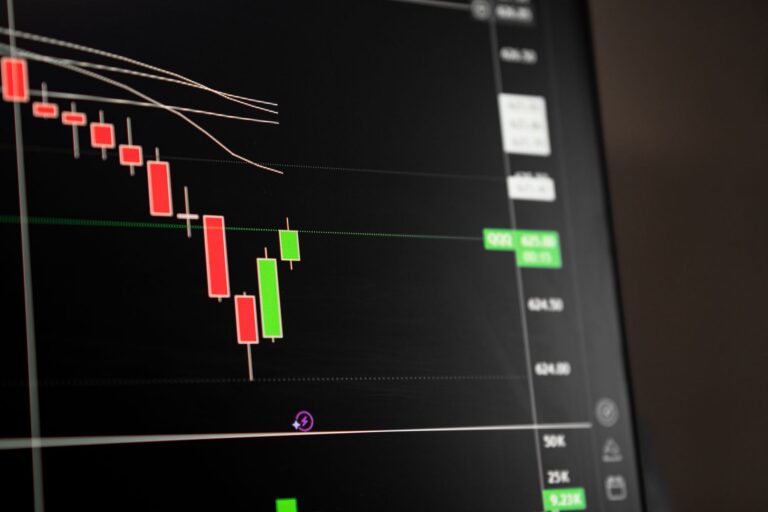

Gold is pressing the tape at $4,188.00, up 1.5%, and the move has the right kind of violence for a post-payrolls repricing. My gold price analysis starts with one simple read: buyers used the jobs miss to attack dollar exposure, but the next clean trade depends on whether XAU/USD can handle the liquidity sitting just above $4,200.
Market Snapshot: Gold Leads After the NFP Miss
XAU/USD holds near $4,188.00, up 1.5% on the session
XAU/USD is trading near $4,188.00, up 1.5% on the session, making gold the cleanest mover on the major non-crypto board. That matters because the move is happening while the broader market is mixed, not euphoric. The S&P 500 is flat near 7,483, the Nasdaq Composite is lower by 0.8% near 25,833, and the Dow is up 1.1% near 52,900.
That split tells me gold is not simply catching a lazy risk-on bid. It is reacting to the macro release, the dollar response, and the repricing of Fed policy odds. When gold outperforms in a messy cross-asset tape, I pay closer attention to structure. Clean displacement after news often leaves a map behind.
Gold is the strongest non-crypto mover on today’s board
Ethereum is up 4.4% and Bitcoin is higher by 0.7%, but outside crypto, gold owns the session. WTI crude is down 0.7% near $68.21, while the dollar index is softer and equities are uneven. For traders tracking broader flows, that mix is useful. Gold is not dragging the commodity complex higher. It is trading its own story.
For more cross-market context beyond metals, I would pair this session with more market analysis, especially when the dollar, yields, and indices are refusing to send one clean message.
Kitco-referenced payrolls miss triggers fresh precious-metals demand
The jobs-report miss has pushed fresh attention into precious metals. Market coverage ahead of the release had already framed labor data as the main macro catalyst, with investors watching the jobs report while chip weakness pressured parts of the equity tape, according to MarketWatch’s live market coverage.
That setup matters. When the market is waiting on payrolls, a downside surprise can move several levers at once: Fed rate expectations, dollar demand, real-yield assumptions, and safe-haven positioning. Gold responded exactly where it should have responded, through the dollar and rates channel first.
Why Did Gold Rally After the Jobs Report Miss?
Weaker payrolls dent Fed-hike bets and support gold demand
Gold usually likes a softer labor impulse because the market starts questioning how much tightening the Fed can credibly keep on the table. Lower expected policy pressure can reduce the appeal of holding dollars and ease some of the opportunity cost tied to non-yielding assets. That is the clean macro explanation behind the bid.
I am careful with that read, though. A payrolls miss can support gold for a few hours, but sustained upside requires acceptance. One headline impulse is not the same as institutional accumulation. The difference shows up in how price handles prior highs, imbalances, and pullback zones after the first expansion.
Softer dollar improves the near-term XAU/USD bid
The softer dollar is doing the heavy lifting for XAU/USD. With DXY near 100.79, down 0.1%, gold has enough foreign-exchange support to hold altitude after the release. EUR/USD at 1.1446 and GBP/USD at 1.3353 are both slightly firmer, which confirms the dollar is not catching a broad bid right now.
That helps gold, but it does not remove execution risk. When XAU/USD is already stretched into round-number liquidity near $4,200, traders who chase late often become the liquidity. I have seen that pattern countless times in metals: strong macro candle, emotional entry, quick stop-run, then the real move starts from a cleaner discount.
Firm yields keep the rally from becoming a one-way macro signal
The US 10-year Treasury yield is near 4.485%, up 0.2%. That is the one part of the board that keeps me from treating this rally as a free ride for bulls. Gold can rise with firm yields when dollar weakness and positioning dominate, but the combination becomes less forgiving.
My opinion is direct: the long side still has the advantage, but the easy headline candle is gone. From here, structure matters more than the news summary.
What Does the Dollar Index Today Signal for XAU/USD?
DXY trades softer near 100.79, down 0.1%
The dollar index today is softer near 100.79, down 0.1%, and that is constructive for gold as long as the weakness does not quickly reverse. DXY is not collapsing, but it is weak enough to validate the post-NFP bid in XAU/USD. That nuance matters. Gold does not need a dollar crash to move higher. It needs the dollar to avoid an aggressive reclaim.
Traders focused on FX confirmation can compare this move with the current dollar-sensitive majors. The same dollar pause is visible in sterling, and I would keep an eye on GBP/USD analysis around a paused dollar rally for confirmation across the FX board.
Dollar weakness helps gold hold altitude despite the 10-year yield near 4.485%
The tension is clear. DXY is softer, but the 10-year yield is still firm. That means gold’s rally is not being supported by every macro input at once. The bid is real, but not uncontested.
For XAU/USD, that creates a more technical trading environment. I want to see how price behaves near liquidity, not how excited the first candle looks. A strong market should either accept above the upside pool or pull back in a controlled way and defend a logical mitigation area.
A DXY rebound would test whether gold’s bid is institutional or headline-driven
A dollar rebound from the 100.79 area would be the first serious test. Headline-driven gold rallies tend to struggle when DXY recovers quickly because late buyers lose the macro cover they used to justify entries. Institutional demand behaves differently. It absorbs, defends, and re-expands from sensible zones.
That is the filter I am using now. Gold can stay bullish, but it needs to prove that the $4,188 expansion was more than a news squeeze.
Gold Price Analysis: Key Liquidity Levels Near $4,188
Buy-side liquidity rests above the $4,200 to $4,220 area
The immediate upside pocket is $4,200 to $4,220. That zone is obvious, and obvious levels attract orders. Breakout buyers see the round number. Short sellers place stops above it. Algorithms read the momentum burst and look for continuation flow.
That is why I do not automatically trust the first push into that band. A raid through $4,200, followed by rejection back below the zone, would tell a very different story than a clean acceptance above $4,220 with follow-through. The first is a liquidity event. The second is continuation demand.
A controlled pullback into $4,125 to $4,155 would offer a cleaner mitigation zone for bulls
The better long-planning area sits below current price, around $4,125 to $4,155. That zone is close enough to the live market to matter, but far enough below $4,188 to reduce the emotional premium attached to the first NFP spike.
I like that area because it can act as a mitigation zone after displacement. It gives traders a place to study reaction, not just guess direction. The best bullish version would be a controlled retracement, slowing momentum into the zone, then a sharp rejection or lower-timeframe shift back toward $4,188 and $4,200.
Acceptance below $4,125 would weaken the continuation case
Below $4,125, the character changes. A sustained move under that level would suggest the post-news rally may have been a liquidity grab rather than the start of a broader leg higher. That does not mean gold becomes structurally bearish across all time frames, but it would damage the immediate institutional continuation thesis.
For gold liquidity levels, I am tracking three areas: current price near $4,188, the buy-side band at $4,200 to $4,220, and the mitigation pocket at $4,125 to $4,155. That is enough. More lines usually create more hesitation.
SMC Gold Trading Plan: Expansion, Sweep, Mitigation
Treat the $4,188 expansion as displacement, not automatic continuation
For smc gold trading, the first job is labeling the move correctly. The rally into $4,188 is displacement. It shows force, range, and urgency. It does not guarantee immediate upside continuation.
Smart Money Concepts traders should ask what the expansion accomplished. Did it clear sell-side liquidity before reversing higher? Did it leave a fair value gap? Did it approach resting buy-side orders above $4,200? Those questions are more valuable than arguing whether the payrolls number was “good” or “bad” for gold.
For traders refining that framework, the broader archive of SMC trading strategies is useful because gold tends to respect liquidity logic cleanly when volatility is high.
Price behavior around $4,200 to $4,220 is the next tell
The $4,200 to $4,220 zone is where I expect the next important decision. A quick stab above that area, followed by a heavy close back inside the prior range, would warn me that stops were harvested. A firm hold above $4,220 would make continuation more credible, especially with DXY still soft.
I do not need perfection there. I need intent. Momentum without acceptance is fragile. Acceptance without momentum is slow, but tradable. The best version for bulls is both.
Fair value gap and order-block logic matter on a pullback toward $4,125 to $4,155
A pullback toward $4,125 to $4,155 should be judged by speed and reaction. Fast selling straight through the zone is not constructive. A measured retracement into imbalance or a prior bullish order block, followed by rejection, is much more attractive.
That is where I would look for lower-timeframe confirmation, such as a failed push lower, a reclaim of a micro range, or displacement back above the pullback high. The stop logic must sit beyond the invalidation, not in the middle of the noise.
My read: gold bulls still control the intraday tape, but chasing into $4,200 liquidity is a lower-quality decision than waiting for acceptance or mitigation.
Is This a Clean Risk-On Setup for Gold?
Dow strength contrasts with Nasdaq weakness as chip pressure weighs on growth sentiment
The equity tape is mixed. The Dow is strong near 52,900, while the Nasdaq is down 0.8%. That divergence matters because gold is not rallying alongside a clean growth impulse. Chip weakness has been a recurring pressure point, with AP reporting that Asian stocks mostly declined amid a sell-off in chip shares.
That creates a less comfortable backdrop for pure momentum chasing. Gold can benefit from lower Fed expectations and a softer dollar while growth stocks struggle. That is not contradictory. It is a mixed regime.
Mixed equity leadership supports caution around momentum chasing
VIX is lower near 15.94, down 1.3%, so volatility is not screaming stress. At the same time, Nasdaq weakness says parts of the market are still selective. Gold’s move should be respected, but not treated as proof that every risk asset has turned higher.
Crude also adds context. WTI is down near $68.21, and oil is not confirming a broad commodity surge. For traders watching energy and inflation signals, the recent WTI crude liquidity discussion near $68.68 gives a useful comparison against gold’s much stronger tape.
Gold’s rally is more about Fed repricing and dollar softness than broad risk appetite
The cleanest explanation remains Fed repricing plus dollar softness. Payrolls missed, DXY softened, gold squeezed higher, and yields stayed firm enough to keep the setup technical. That is the picture.
Calling this a broad risk-on gold rally would be too loose. The better read is a macro repricing move into a known liquidity pocket. That distinction keeps traders disciplined when the market gets loud.
Bullish and Bearish Scenarios to Track Next
Bull case: acceptance above $4,200 to $4,220 confirms continuation demand
The bull case strengthens on acceptance above $4,200 to $4,220. I want to see price hold that zone after clearing it, not simply tag it. A strong reclaim with follow-through would open the door for continuation buyers to defend higher prices.
Fed rate expectations remain central here. Softer policy expectations should keep gold supported as long as the dollar does not aggressively rebound and yields do not accelerate higher.
Base case: a pullback into $4,125 to $4,155 gives cleaner long planning
The base case is a pullback after the first expansion. That would be healthy. A return toward $4,125 to $4,155 could clean up the chart and offer a better read on whether real buyers are supporting the move.
The ideal reaction is controlled selling into the zone, followed by rejection and a lower-timeframe shift. That gives traders a plan with defined invalidation instead of a chase entry near obvious stops.
Bear case: sustained acceptance below $4,125 invalidates the institutional continuation thesis
The bear case starts with sustained acceptance below $4,125. That would tell me the post-NFP move failed to hold its key support area. From there, the market could rotate lower as late longs unwind and the dollar tests a rebound.
That scenario would not erase the longer-term gold story, but it would change the near-term xau usd forecast. The market would move from bullish continuation to failed expansion, and failed expansions deserve respect.
FAQ
What is the main driver in this gold price analysis?
Gold is rallying because the jobs-report miss weakened the dollar and reduced confidence in additional Fed hikes. With XAU/USD trading near $4,188, up 1.5%, buyers are pressing the macro repricing. The softer DXY at 100.79 is helping offset a firm 10-year yield near 4.485%.
What are the key gold liquidity levels now?
The immediate upside liquidity pocket sits around $4,200 to $4,220, where a sweep could appear before a cleaner continuation signal. Below spot, the more constructive bull zone is a controlled pullback into $4,125 to $4,155. Acceptance below $4,125 would weaken the rally’s institutional continuation case.
Is the XAU USD forecast bullish after the NFP miss?
The bias is bullish while gold holds its post-news bid, but the structure is not chase-friendly. A sweep above $4,200 to $4,220 or mitigation into $4,125 to $4,155 may offer better confirmation. A sustained move back below $4,125 would suggest a news-driven liquidity grab.
How do Fed rate expectations affect gold?
Gold often benefits when Fed rate expectations move lower because real-yield pressure and dollar demand can ease. The payrolls miss dented Fed-hike bets, making non-yielding gold more attractive. However, a firm 10-year yield means the bullish impulse still needs clean price acceptance.
How should SMC traders approach gold today?
SMC gold trading should focus on liquidity first, not headline chasing. Watch for buy-side liquidity above $4,200 to $4,220, then assess displacement and confirmation. If price pulls back, the $4,125 to $4,155 area is the cleaner mitigation zone, while acceptance under $4,125 warns bulls to step aside.
Gold has the bid, the dollar is soft, and the next real test is sitting just overhead. Do you trust acceptance above $4,220, or are you waiting for the pullback into mitigation first?
Disclaimer: This article is for educational purposes only and is not financial advice. Trade with a tested plan and manage risk.