$84.29 is the line traders are staring at now. WTI crude oil is down 3.9% on the session, and the drop has the look of a clean sell-side raid rather than a slow macro drift. The tape is unusual because equities are green, volatility is lower, and the dollar is barely moving. That tells me the crude move is being driven by oil-specific repricing, with U.S.-Iran headlines doing most of the damage.
WTI Crude Oil Market Snapshot Today
Spot check: WTI trades near $84.29, down 3.9% on the session
WTI is trading near $84.29, down 3.9%. For a major commodity contract, that is a serious intraday move. It is large enough to force position adjustments, trigger resting sell stops, and drag short-term market structure into a new bearish leg.
The first thing I want to know after a move like this is simple: did crude fall because the whole risk complex got hit, or did crude get singled out? The answer matters because a broad liquidation move usually behaves differently from a targeted repricing. Right now, the evidence points to a targeted move in oil.
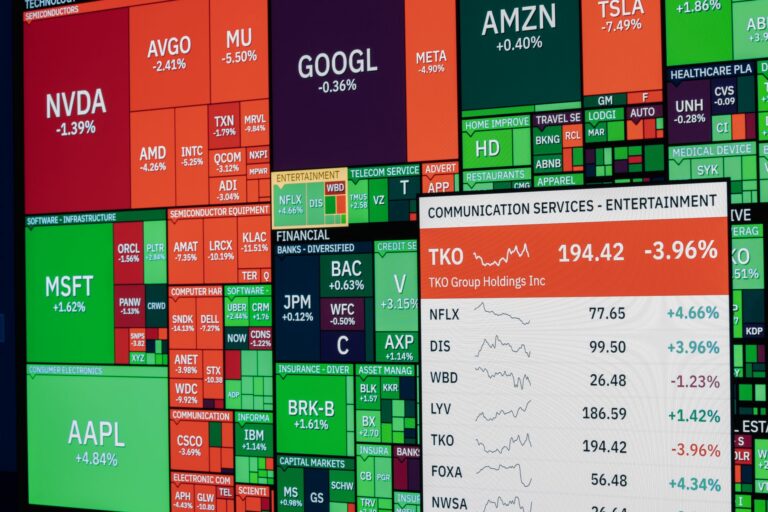
Gold is bid at $4,239.90, up 3.1%. The S&P 500 is higher. The Dow is higher. Bitcoin is slightly green. The U.S. Dollar Index is nearly flat. That mix does not scream global panic. It says crude is absorbing a specific catalyst, and that catalyst is the fading war premium tied to Iran risk premium in WTI.
Oil price today compared with S&P 500, Dow, VIX, and DXY
The oil price today is moving against the broader risk tone. The S&P 500 is at 7,431, up 0.5%. The Dow Jones Industrial Average is at 51,202, up 0.7%. Nasdaq is up 0.3%. VIX is down 9.1% at 17.68. That is a risk-on market, at least across equities and volatility.
The DXY is sitting near 99.81, down 0.1%. That is close to unchanged. A flat dollar does not explain a 3.9% crude drop by itself. When oil falls hard while the dollar is quiet and equities are bid, I treat the move as a commodity-specific repricing until proven otherwise.
Investopedia also framed the session around stocks closing higher while oil fell on hopes of an imminent U.S.-Iran peace deal, which matches the cross-asset message on the screen: risk appetite is present, but crude’s geopolitical premium is being marked down fast. Investopedia reported the same stock and oil divergence.
Why crude is the strongest allowed mover in the current tape
Crude is not always the cleanest market, but it often becomes the loudest when geopolitical risk changes. Energy contracts can reprice quickly because the marginal buyer or seller is not only thinking about charts. They are thinking about shipping lanes, sanctions, inventories, military risk, and political headlines.
My view is straightforward: WTI is the strongest allowed mover here because the market is removing a premium that was previously accepted as necessary. Once that premium is challenged, price does not need a stronger dollar or a weaker equity tape to drop. It only needs buyers to step back.
Why Are U.S.-Iran Talks Hitting Crude Prices?
Peace-deal hopes strip geopolitical risk premium from WTI
The U.S.-Iran talks matter because crude had been carrying a risk premium tied to potential disruption. When traders start pricing better diplomatic odds, barrels that were once treated as threatened supply suddenly look less threatened. That repricing can be brutal.
Peace optimism does not have to mean a final deal is signed. Markets move on probability, not ceremony. A shift from “high escalation risk” to “negotiations may work” is enough to push oil lower, especially when longs are crowded into the same narrative.
Kitco’s market coverage, republished by Bitget, also pointed to crude sliding while stocks rose as traders reacted to U.S.-Iran talks. That is the key relationship here. The report described precious metals firming while crude weakened on the talks.
War-premium unwind versus normal supply-demand repricing
A normal supply-demand repricing usually comes with inventory data, refinery demand, OPEC guidance, or changes in expected consumption. This move feels different. The speed and timing suggest traders are removing geopolitical insurance from the contract.
That distinction matters for trade management. A normal bearish supply story can grind for days as analysts revise balances. A war-premium unwind can travel fast, overshoot, reverse hard, and punish late sellers. I have seen this pattern often enough in commodities: once the headline premium comes out, price can slice through levels that looked important an hour earlier.
That does not mean the selloff is fake. It means traders should respect both sides of the risk. The move lower is real, but the catalyst can reverse with one credible headline.
Headline risk to monitor if negotiations stall or reverse
The biggest risk for shorts is a stalled negotiation headline. Oil reacts sharply when diplomacy deteriorates, especially if the market has just discounted a lower probability of conflict. Fresh sanctions language, naval tension, or public comments from either side could quickly rebuild part of the premium.
Traders should also watch whether equities keep ignoring the oil move. A steady risk-on tape with falling crude supports the idea of an oil-specific policy repricing. A sudden equity reversal would change the read, because then crude weakness could merge with broader de-risking.
Is This Crude Oil Analysis More Geopolitical Than FX-Driven?
DXY near 99.81 and down 0.1% limits the dollar-strength argument
This crude oil analysis starts with the dollar, but it does not end there. DXY is near 99.81 and slightly lower on the session. EUR/USD is around 1.1568, basically flat. GBP/USD is also close to unchanged. USD/JPY is up 0.2% at 160.21, but that move is not enough to call the entire oil selloff a dollar story.
Dollar strength can pressure commodities because crude is priced in dollars. That relationship matters over time. Here, the size of the crude decline compared with the tiny DXY move tells me FX is a secondary input.
Risk-on market backdrop: S&P 500 up 0.5%, Dow up 0.7%, VIX down 9.1%
The equity backdrop is constructive. The S&P 500 is up 0.5%, the Dow is up 0.7%, and the VIX is down sharply. That combination usually helps cyclical assets, including energy, because lower volatility and higher equities tend to support growth-sensitive trades.
Yet WTI is down hard. That is the message. A risk-on market can support oil when the driver is demand optimism, but it cannot always offset a sudden drop in geopolitical risk premium. For a broader read on how the equity side is behaving, see our Dow Jones risk-on analysis.
Why oil-specific policy headlines are overpowering broad risk appetite
Oil trades on multiple clocks at once. There is the macro clock, which tracks growth, rates, and the dollar. There is the physical clock, which tracks barrels, storage, and refinery demand. Then there is the headline clock, which can dominate everything when Middle East risk is involved.
Right now, the headline clock is leading. That is why crude can fall while equities rise. The market is not saying demand has collapsed. It is saying the price traders were willing to pay for geopolitical insurance has changed.
What Does the WTI Liquidity Sweep Show in SMC Terms?
Sharp bearish displacement suggests a sell-side liquidity run below intraday balance
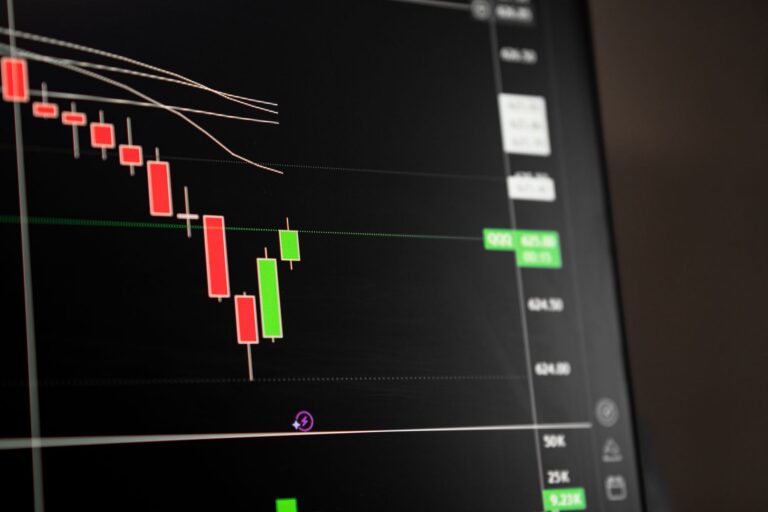
From a Smart Money Concepts perspective, the drop into the $84 area looks like bearish displacement through intraday balance. Price did not gently rotate lower. It expanded. That usually means resting liquidity below recent lows became the target.
A WTI liquidity sweep near $84 is exactly the kind of move I watch for after a headline-driven repricing. Sellers push through obvious support, late longs get forced out, and the market tests whether fresh buyers are willing to absorb the supply. For more on how I frame these raids, the SMC trading strategies section covers the core playbook.
My read: the $84 zone is less about a magic number and more about order flow. The market is testing stops, weak longs, and short-term liquidity below the prior intraday range.
Why the move is a liquidity hunt, not simply a trend confirmation
A strong red candle does not automatically confirm a clean new trend. In SMC, displacement matters, but what happens after the raid matters more. Price can run stops and then reverse if the sell-side grab completes the objective. It can also accept below the swept area and continue toward the next pool.
That is why I do not chase the first flush blindly. I want to see whether the market holds below $84.30, rejects back into the breakdown zone, or builds a new lower distribution. The best trades usually come after the market reveals whether the raid found absorption or opened the door to continuation.
How to read continuation versus reversal after a sweep near $84
Continuation has a specific feel. Price stays heavy below $84.30, bounces are shallow, and sellers defend prior support as resistance. Volume and volatility may cool, but structure remains offered.
Reversal looks different. Buyers reclaim lost ground, hold above the broken area, and force shorts to cover into the $85.60-$86.70 zone. That would not erase the bearish move, but it would challenge the quality of the displacement.
Key WTI Levels: Breakdown Zone and Liquidity Targets
Near-term resistance sits around the $85.60-$86.70 breakdown zone
The first resistance band I care about is $85.60-$86.70. That is the breakdown zone where sellers should want to defend price. A weak bounce into that area followed by rejection would keep the bearish structure intact.
This zone also gives traders a cleaner risk framework than selling directly into $84 after a fast move. Chasing low often creates poor entries. Waiting for price to trade back into imbalance or prior support can offer a better read on whether institutions are still distributing.
A reclaim of $85.60-$86.70 would weaken bearish displacement
If WTI recaptures $85.60-$86.70 and holds there, the bearish expansion loses authority. That would tell me the stop-run near $84 may have completed its job, at least for the near term.
A reclaim does not instantly make crude bullish. It would, however, force sellers to prove themselves again. In that case, I would watch for acceptance above the band, failed breakdown behavior, and a potential rotation back toward the prior intraday value area.
A clean hold below $84.30 keeps $83.20 and $82.40 in focus as downside liquidity
The downside map is clear enough. A clean hold below $84.30 keeps $83.20 and $82.40 in focus as the next liquidity pockets. Those levels are close enough to spot to matter for the next session, but far enough away that traders should avoid assuming a straight line.
If price trades into $83.20, I would watch the reaction carefully. Fast rejection would suggest the market found buyers. Acceptance below it would shift attention toward $82.40. For ongoing cross-market updates beyond crude, use our market analysis feed.
How Should Traders Frame the Next WTI Session?
Bearish scenario: acceptance below $84.30 and continuation toward liquidity targets
The bearish case is strongest while WTI accepts below $84.30. Acceptance means more than a quick wick. I want to see price spend time below the level, reject upside attempts, and continue forming lower highs on intraday structure.
In that scenario, $83.20 becomes the first downside objective, with $82.40 behind it. Sellers have control as long as rallies are used to reload rather than reverse.
Bullish invalidation clue: reclaim and hold above the breakdown zone
The bullish clue is a reclaim of $85.60-$86.70. That would pressure late shorts and suggest the $84 raid was a liquidity event rather than the start of a deeper trend leg.
There is no need to predict that outcome. Let price do the work. A hold above the breakdown band would shift the next trade from chasing downside to assessing whether crude can rebuild value above the failed breakdown.
Event risk: fresh U.S.-Iran headlines can quickly reprice the war premium
Fresh US Iran talks headlines remain the wild card. A constructive update can keep pressure on crude by removing more geopolitical premium. A hostile update can squeeze shorts quickly, especially after a 3.9% drop into sell-side liquidity.
My trading bias is cautious bearish below $84.30, but I would not marry that view. Crude is trading a policy headline, and policy headlines do not respect clean chart drawings. The next high-quality setup comes from how price behaves around $84.30 and the $85.60-$86.70 breakdown zone.
FAQ
What is driving WTI crude oil lower today?
WTI crude oil is down 3.9% near $84.29 because fresh U.S.-Iran peace headlines are reducing the geopolitical risk premium. With DXY nearly flat at 99.81, the move looks more policy-driven than FX-driven, while risk assets remain broadly bid across the session.
Is WTI weakness caused by dollar strength?
No. The DXY is almost unchanged, down 0.1% near 99.81, so the crude oil analysis does not point to dollar strength as the main driver. The larger catalyst is repricing of war premium as traders react to U.S.-Iran talk optimism.
What is a WTI liquidity sweep?
A WTI liquidity sweep occurs when price drives into a cluster of resting orders, often below recent lows or above recent highs, before deciding whether to continue or reverse. Today’s selloff suggests crude is attacking sell-side liquidity near the $84 area after losing intraday balance.
Which WTI levels matter next?
Near term, $85.60-$86.70 is the breakdown zone sellers want to defend. A reclaim would weaken bearish displacement. If WTI holds below $84.30, downside liquidity targets sit around $83.20 and $82.40, where short-term traders may watch for reaction or continuation signals.
How does a risk-on market affect oil price today?
The risk-on market is not lifting WTI because the oil-specific catalyst is stronger. The S&P 500 and Dow are higher, and VIX is down sharply, but peace-deal hopes are stripping crude’s geopolitical premium faster than broader risk appetite can support prices.
For the next session, I am watching one question: does WTI accept below $84.30 and press into fresh liquidity, or does the market reclaim the breakdown zone and punish late shorts?
Disclaimer: This analysis is for educational purposes only and is not financial advice. Trade with your own plan, risk controls, and independent judgment.