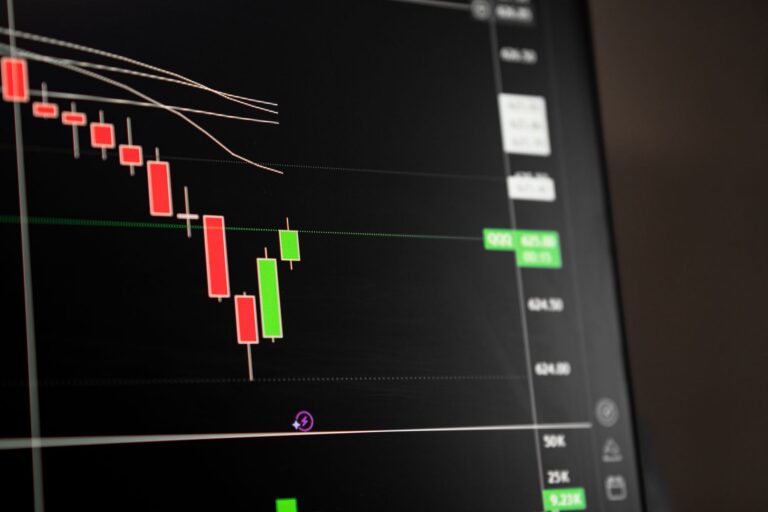
WTI crude oil is trading near $69.47 after losing 3.4%, and the break under the $70.00 handle is the line that matters. I don’t treat that as a random round-number slip. When crude breaks a widely watched level during a risk-off tape, with the dollar softer and yields steady, the message is usually coming from demand expectations and order flow.
The market is showing a clean split. Gold is slightly bid near $4,058.40, the VIX is up 6.6% at 20.14, Bitcoin is down 3.1%, and Ethereum is down 5.9%. Crude is joining the growth-sensitive side of the board rather than the defensive side. That matters for anyone running more market analysis across commodities, FX, indices, and crypto.
WTI Crude Oil Snapshot: Below $70 And Down 3.4%
Live price context after the break of $70.00
WTI Crude Oil is sitting near $69.47, which puts price below the broken $70.00 handle and keeps the session structure heavy. The level matters because it was obvious. Obvious levels collect resting orders, stops, breakout sellers, failed dip buyers, and short-term systematic flow. Once price accepted underneath it, the tape stopped looking like a simple test and started looking like a bearish displacement through a major reference point.
I’ve learned to respect crude when it breaks a clean figure with this kind of momentum. Oil can be noisy, but when the move is tied to macro stress and demand anxiety, the follow-through often extends farther than late longs expect.
Intraday momentum leaves oil as the key mover on this setup
The 3.4% drop makes crude the dominant commodity move on this board. Gold is only up 0.3%, while equities are mixed: the S&P 500 is nearly flat, the Nasdaq Composite is down 0.5%, and the Dow is up 0.1%. That tells me crude is not simply mirroring every risk asset tick for tick. The oil tape has its own pressure.
For traders, that distinction matters. A market can be risk-off in the aggregate while one asset carries the cleanest directional signal. Today, that asset is crude.
The core thesis is demand fear over safe-haven flow
The clean read is straightforward: demand fear is overpowering any geopolitical or defensive bid that oil sometimes receives during nervous sessions. Oil can act like a hedge when supply risk dominates. It can also act like a cyclical growth asset when traders start marking down future consumption. Right now, the second behavior is winning.
My view: below $70.00, the burden of proof sits with buyers. They need to show a real recapture, not a shallow bounce into the breakdown zone.
Why Is WTI Crude Oil Falling Below $70?
Growth concerns are dragging crude oil demand lower
The most direct explanation is weaker crude oil demand expectations. When traders worry about slower activity, they mark down transportation use, industrial demand, freight movement, and refined product consumption. That pressure reaches the front-month crude contract quickly because oil is priced at the intersection of current inventory, expected demand, and financial positioning.
Reports have also pointed to oil weakness alongside shifting global equity sentiment. AP reported that oil prices fell as Asian shares rebounded, a useful reminder that crude can disconnect from simple “risk on, risk off” labels when the demand side takes control.
Oil is trading like a cyclical growth asset
During some geopolitical shocks, crude catches a bid because traders price supply disruption. That is not the dominant story at $69.47. The current move looks more like liquidation from growth-sensitive positioning. Crypto weakness supports that read, with Bitcoin near $59,191 and Ethereum near $1,537. The higher VIX confirms stress, but crude is not behaving like a sanctuary trade.
That’s why I’m treating this as a demand-led move unless the tape proves otherwise. Recent market coverage has also highlighted how oil, technology shares, and Bitcoin have been moving as part of a broader cross-asset stress complex, including Bitcoin News coverage of oil and Bitcoin shaking Wall Street sentiment.
The $70.00 break changes the oil price analysis
Before the break, $70.00 could be treated as support and a potential reaction zone. After the break, it becomes a failed support level. That shift changes the short-term oil price analysis from “can buyers defend?” to “where are sellers drawing price next?”
From a Smart Money Concepts perspective, failed support often becomes a supply reference. Traders who bought the level and got trapped may use a bounce to exit. Fresh shorts may also lean against the same area. That combination can cap recovery attempts until price recaptures the breakdown zone with strength. For readers focused on structure and institutional-style execution, I’d keep this tied to broader SMC trading strategies rather than chasing every one-minute candle.
What Do Risk-Off Markets Mean For Oil Today?
VIX at 20.14 confirms broader risk off markets
The VIX is at 20.14, up 6.6%, which confirms risk off markets across the session. That volatility bid is important because it tells us traders are paying up for protection. Still, risk-off does not automatically mean oil must rise. It depends on which fear dominates.
Right now, the market is not pricing oil as the clean hedge. It is pricing crude as an asset exposed to softer demand and weaker forward activity. That is why a higher VIX and lower crude can coexist without contradiction.
Crude weakness contrasts with classic safe-haven behavior
Gold is slightly higher near $4,058.40, which fits the defensive tone better than crude does. The US dollar, however, is down 0.3% near 101.08, and that removes one common explanation for commodity pressure. A stronger dollar often weighs on dollar-priced commodities. Today, that argument is weaker.
For comparison, gold has its own relationship with the dollar and risk sentiment, which I covered in this gold price analysis. Crude is sending a different message. Energy traders are looking through the defensive mood and focusing on consumption risk.
Demand sensitivity is stronger than defensive positioning
The market is telling us crude is more sensitive to demand than to defensive positioning. That is the key read. When the economy looks firm, oil often benefits from growth. When growth confidence softens, the same sensitivity cuts the other way.
I don’t want to overcomplicate that. The tape is heavy because sellers have a better story and better structure below $70.00.
Key Oil Liquidity Levels After The $70 Break
Sell-side liquidity is now below the broken handle
The first area I’m watching is sell-side liquidity under the current trading zone. Once $70.00 broke, short-term longs who used that figure as a support reference likely had stops below it. Some of that liquidity has already been tapped, but the move can keep searching lower if acceptance builds under the handle.
That is the SMC logic. Price often moves from one liquidity pool to the next. After a clean break, the question is whether the market has fully raided the nearby stops or whether deeper orders remain attractive.
$69.00 and $68.50 are the nearby downside zones
The nearest downside reference zones are $69.00 and $68.50. These are not magical levels. They are practical zones where liquidity, short-term profit taking, and responsive buying can show up. With spot near $69.47, both are close enough to matter in the current session rather than being distant fantasy targets.
I would not assume the first touch of $69.00 automatically creates a durable low. The quality of the reaction matters. A weak bounce that stalls below $70.00 keeps sellers in control, while a fast reclaim through the breakdown area would change the tone.
Acceptance below $69.00 favors a deeper draw
Acceptance below $69.00 would put $68.50 into sharper focus and increase the odds of another stop-run lower. That would tell me the market is comfortable doing business beneath the first downside shelf, which usually favors continuation over quick mean reversion.
These are the oil liquidity levels I care about now: $70.00 above as the failed handle, $69.00 as the first downside test, and $68.50 as the next magnet if sellers maintain control. Clean. Tradeable. No need to invent levels all over the chart.
Is The Dollar Driving Today’s Oil Weakness?
DXY is softer near 101.08
The US Dollar Index is down 0.3% near 101.08, so the crude selloff is not being driven by a stronger dollar. That matters because a dollar rally is one of the easiest explanations for commodity weakness. Today, that explanation does not carry enough weight.
EUR/USD is up 0.5% near 1.1428, GBP/USD is up 0.1% near 1.3210, and USD/JPY is slightly lower near 161.64. The FX board is not screaming dollar pressure. Oil is falling anyway.
The US 10Y yield is steady near 4.392%
The US 10Y Treasury yield is near 4.392% and essentially unchanged. That also weakens the rates-pressure argument. Rising yields can hurt risk appetite and tighten financial conditions, but today’s crude decline is happening without a fresh yield spike.
That leaves demand concerns, positioning, and crude-specific order flow as the more credible drivers. When the clean macro excuses are missing, I trust the tape.
Demand fear and bearish order flow explain the move better
The current setup is better explained by growth concern and bearish crude flow than by FX or rates. Sellers have the breakdown. Buyers have the burden. Until that changes, the path of least resistance remains lower into the next liquidity pockets.
Recent mainstream coverage has shown how oil can also rally when Mideast tension grabs attention, including Investopedia’s market update noting oil strength during flare-ups in regional tension. That contrast is useful. Today’s weakness below $70.00 says the demand side is currently louder than the supply-risk story.
How Lower Oil Prices Affect Inflation Pressure
Energy costs feed into gasoline, diesel, shipping, and inputs
Lower crude prices can reduce inflation pressure through several channels. Gasoline is the obvious one, but diesel, freight, petrochemical inputs, airline fuel, and producer costs also matter. Energy is not the whole inflation basket, but it touches more than traders sometimes admit.
When crude falls sharply, markets often start asking whether headline inflation can cool faster. That can affect bonds, equities, currencies, and central-bank expectations.
Softer energy supports the easing inflation narrative
At $69.47, crude is not collapsing into a crisis zone, but it is low enough below $70.00 to support the easing inflation narrative if the decline persists. One session does not rewrite the CPI path. Sustained energy softness can help reduce the pressure that businesses and consumers feel over time.
That’s why crude matters beyond commodity traders. It feeds into the macro conversation and can shape how investors position across risk assets. For index traders watching the same macro crosscurrents, the setup connects directly with broader equity themes like those discussed in this Nasdaq analysis.
Inflation relief matters for Fed rate-cut expectations
Lower oil can give the market more room to price eventual Federal Reserve easing, assuming other data also cooperate. The Fed does not cut rates because crude has one bad day. Persistent softness in energy, combined with cooling labor and inflation data, would be more meaningful.
That nuance matters. A bearish crude chart can be bullish for the inflation story while still signaling concern about growth. Traders need to hold both ideas at once.
SMC Trading Plan: Bearish Order Flow Below $70
Sellers are defending the post-break structure
Below $70.00, the structure remains bearish. The cleanest SMC read is that sellers are defending the broken support area and price is hunting lower liquidity. Failed support can become supply, especially when the initial break is sharp enough to trap buyers.
I’m watching for lower-timeframe rallies into the underside of $70.00. A slow grind into that area followed by rejection would keep the short-side plan intact. A violent squeeze through it would warn that late shorts are getting punished.
A reclaim of $70.50 to $71.00 would challenge the bears
The first serious challenge to bearish order flow would be a recapture of $70.50 to $71.00. That zone sits above the broken handle and would show that buyers are doing more than reacting to oversold conditions. They would be taking back territory.
Until then, I would rather sell weak rallies than chase lows blindly. That is a clear opinion, and it comes from watching crude punish traders who short after the easy part of the move. Location still matters.
Downside liquidity remains the cleaner directional draw
As long as price holds below the $70.00 breakdown area, downside liquidity remains the cleaner draw. The next references are $69.00 and $68.50. A deeper slide would require fresh acceptance below those zones, but the current structure favors sellers.
For trade planning, I want alignment between the macro read and the chart. Here, the alignment is decent: risk off markets, weaker growth sentiment, softer crude, no strong-dollar excuse, and bearish structure below a major handle. That is enough to keep me defensive on oil until buyers prove they can reclaim the failed level.
FAQ
Why did WTI crude oil break below $70 today?
WTI crude oil broke below $70 because growth and demand fears are outweighing safe-haven flows. Even with risk-off markets confirmed by a higher VIX, oil is trading like a cyclical asset. The move also reflects easing inflation pressure rather than dollar strength.
What are the key downside levels for WTI crude oil?
After the break below $70.00, $69.00 and $68.50 are the nearest downside reference zones. Price is currently near $69.47, so those levels are close enough to matter. Acceptance below $69.00 would favor a deeper draw on sell-side liquidity instead of an immediate mean-reversion bounce under the broken handle.
Is a stronger dollar causing today’s oil selloff?
No. DXY is down about 0.3% near 101.08, so the selloff is not being driven by a stronger dollar. With the US 10Y yield steady near 4.392%, the pressure is coming more from demand concerns and bearish crude-specific order flow.
How do lower oil prices affect the inflation outlook?
Lower crude prices can reduce pressure across gasoline, diesel, freight, and production costs. That matters because softer energy inputs support the easing inflation narrative, giving markets more room to discuss future Federal Reserve rate cuts if broader economic data also cools.
What would challenge the bearish SMC view on oil?
From an SMC perspective, sellers remain in control while price holds below the broken $70.00 area. A reclaim and acceptance through $70.50 to $71.00 would be the first signal that bearish order flow is being challenged by responsive buyers in session.
The next clean signal is simple: does crude accept below $69.00 and continue toward $68.50, or do buyers force a recapture of the $70.00 handle? That answer will tell us whether this break is the start of deeper demand repricing or just a sharp stop-run before balance returns.
Disclaimer: This analysis is for educational purposes only and is not financial advice. Always manage risk and make trading decisions based on your own plan.