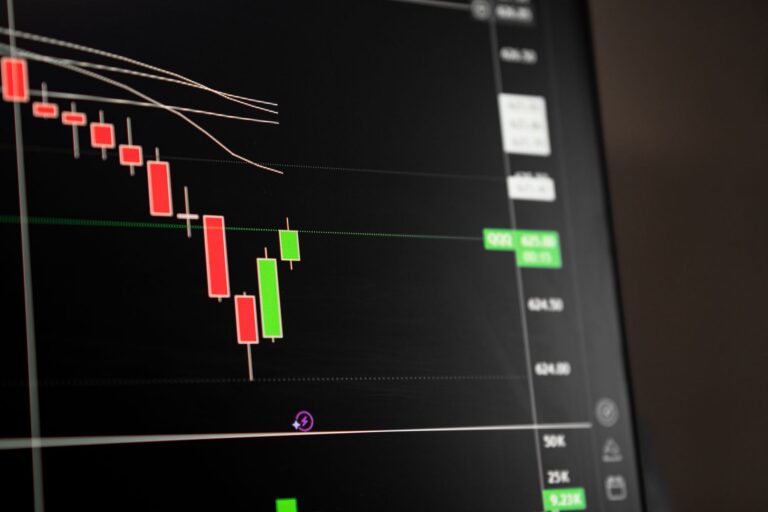
WTI is sitting at $93.01, down 3.1% on the session, and that’s the only number that matters before any trader starts arguing about headlines. This WTI crude oil analysis starts with a simple read: the market priced in Mideast risk, pushed toward premium territory, then failed to hold the bid. For Smart Money Concepts traders, that rejection is useful. It gives us structure, liquidity, and a clean invalidation map.
The broader tape is mixed. Gold is firmer at $4,461.59, the Dollar Index is slightly softer at 99.27, Nasdaq is down 0.6%, and Bitcoin is getting hit harder at $63,801. Energy is the cleanest volatility pocket on my screen right now because WTI has both a headline catalyst and an obvious technical response.
WTI Crude Oil Analysis: Why $93 Matters Today
WTI Crude Oil Trades At $93.01, Down 3.1% On The Session
At $93.01, WTI is no longer acting like a market eager to keep paying a geopolitical premium. A 3.1% drop in crude is not noise. It tells me sellers are active, late longs are under pressure, and the prior upside impulse has met enough supply to force a repricing.
I don’t treat $93 as magic support. Round numbers attract attention, but the real work is done around the liquidity just above and below them. At this level, I’m watching whether the market builds a lower high under nearby supply or raids the $92 area before showing a reaction. That distinction matters more than guessing the next headline.
Today’s Cleanest Non-Crypto Mover Comes From Energy Volatility
Crypto is moving, but the clean institutional story is in crude. Bitcoin is down 4.5% and Ethereum is down 4.6%, yet those markets often carry their own leverage flushes and exchange-specific behavior. WTI crude trading is cleaner here because the price action lines up with a macro catalyst, a failed premium, and defined intraday levels.
For traders who want more market breakdowns beyond energy, I’d keep an eye on more trading analysis, especially when commodities, indices, forex, and crypto start moving from the same risk impulse. Cross-market confirmation is useful, but crude still needs to trade its own chart.
The Move Rejects The Geopolitical Premium Instead Of Extending It
The headline backdrop is obvious. The Wall Street Journal reported oil approaching $100 again after Mideast fighting, which shows how quickly energy traders priced in risk. That kind of move can stretch a market, especially when positioning gets crowded around the same story.
Now WTI is back near $93.01. That does not mean the risk disappeared. It means buyers failed to keep control at the elevated levels. In SMC language, the premium became vulnerable once price stopped expanding higher and started accepting lower levels. That’s the shift I care about.
Why Is Oil Price Today Falling Despite Mideast Risk?
Mideast Fighting And Iran Uncertainty Are The Fresh Catalyst
Oil price today is falling while geopolitical risk remains alive because markets often front-run danger before the facts are fully priced. Mideast fighting and uncertainty around Iran are legitimate catalysts, and crude traders are right to respect them. Supply routes, production risk, shipping insurance, and escalation probability all matter.
But a catalyst only matters to a trade when price confirms it. A strong headline that fails to create continuation can become fuel for the other side. Late longs buy the fear, then get trapped when price rolls over. That is why I never let the news narrative replace the chart.
Headline Risk Created Volatility, But Buyers Failed To Hold Premium
WTI’s drop to $93.01 shows that the initial bid has been faded. The market had an opportunity to keep pushing higher, especially with risk-sensitive headlines in play. Instead, sellers absorbed the move and forced price back toward the prior liquidity field.
There’s a difference between volatility and control. Volatility gives range. Control tells us who is defending value. Right now, sellers have the better intraday argument unless buyers reclaim the broken area with force.
Price Action Matters More Than The News Narrative
My clear opinion: traders lose money in crude when they trade the headline after the market has already traded it. The chart usually tells you whether the news still has fuel. At $93.01, the message is cautious, not euphoric.
Broader market context also supports selectivity. MarketWatch noted a mixed equity backdrop with Nasdaq pressure and Bitcoin below $68,000, which fits a tape where risk appetite is uneven rather than aggressively one-directional. Crude can still rally on fresh escalation, but the current tape is asking buyers to prove it.
Where Is The Key Oil Market Structure?
$94.50-$95.50 Is The Lower-High Supply Zone To Watch
The most important oil market structure sits above current price. I’m focused on the $94.50 to $95.50 area as the supply zone where a lower high can form. That zone is close enough to spot to matter, and it lines up with the type of retest traders should prefer after a sharp drop.
A move into that pocket gives sellers a chance to defend structure. It also gives shorts a better location than hitting the market after the initial flush. Location is everything. Selling $93.01 after a 3.1% slide can work, but the risk-to-reward is usually weaker than waiting for a cleaner retracement.
Sell-Side Liquidity Sits Below The $92.00 Area
Below the market, the $92.00 area is the obvious sell-side liquidity zone. Stops under recent lows, breakout short orders, and liquidation pressure can cluster there. A raid below $92.00 could produce either acceleration or a sharp reaction, depending on how price behaves after taking that pool.
That’s why I don’t automatically call $92 support. Liquidity below a level often gets taken before the market decides. The clean read comes after the grab: does price accept below it, or does it snap back above with aggressive buying?
A $94.80 Reclaim With Displacement Weakens The Bearish Intraday Structure
The first serious warning for bears is a $94.80 recapture with strong expansion. A lazy drift into $94.80 is not enough. I want to see candles that show commitment, speed, and acceptance above the prior breakdown area.
If WTI pushes above $94.80 with real force, the lower-high thesis starts to weaken. A move through $95.50 would challenge it more directly. Until that happens, the current structure favors rallies being sold rather than dips being trusted blindly.
Smart Money Concepts Oil Trade Map
Avoid Chasing $93.01 After The Initial Displacement
For smart money concepts oil traders, the first rule here is simple: don’t chase the first drop. WTI at $93.01 has already delivered the initial expansion lower. Entering late means accepting worse location, wider stops, and more emotional decision-making.
I’ve traded enough crude and FX volatility to know the best trades usually feel slower at first. You wait for price to come back into an area where institutions can reload, then you look for evidence. That evidence can be a lower-timeframe break, a failed push into supply, or a liquidity grab that reverses cleanly.
Traders working on execution discipline should revisit how to control emotions in trading to avoid FOMO. Energy markets punish impatience because the candles move fast and the spreads can widen right when retail traders start forcing entries.
A Controlled Pullback Into $93.80-$94.60 Is The Cleaner Continuation Setup
The cleaner bearish setup is a controlled pullback into $93.80 to $94.60. That range sits below the larger $94.50 to $95.50 supply band, so it gives traders an early reaction zone without requiring a full retrace into the top of resistance.
What I want to see there is not random hesitation. I want a lower-timeframe liquidity run above a minor high, rejection back below the pullback range, and then expansion toward $92.00. That sequence tells me sellers are defending the repricing and buyers are struggling to reclaim control.
For traders building a repeatable playbook around these patterns, the strategy strategies and guides section is the better place to study process rather than hunting for isolated signals.
Aggressive Shorts Need Tight Invalidation Above The Latest Supply Pocket Near $95.50
Aggressive shorts only make sense with disciplined invalidation. The latest supply pocket near $95.50 is the level I would not want to see reclaimed if I were pressing the short side. Price can wick. Crude does that all the time. What matters is whether it accepts above the zone and starts building higher lows.
Using a stop well above structure just because crude is volatile usually turns a tactical trade into a hope trade. That’s a bad exchange. The setup is strongest when the invalidation is obvious and close enough to keep position sizing honest.
Trade map: $93.80 to $94.60 is the cleaner pullback zone, $95.50 is the main bearish invalidation area, and sub-$92.00 is the near-term liquidity objective.
What Would Confirm Bearish WTI Crude Trading Continuation?
Failure Inside $93.80-$94.60 Keeps Sellers In Control
Bearish continuation becomes more convincing when WTI rebounds into $93.80 to $94.60 and fails. The failure should look active, not passive. Rejection wicks, lower-timeframe breaks, and a fresh push away from the zone would all suggest sellers are still defending the move.
A weak rebound is useful because it exposes buyer fatigue. Strong markets recover with authority. Weak ones drift upward, invite late longs, then rotate lower once the liquidity above minor highs has been harvested.
A Sweep Below $92.00 Could Trigger The First Meaningful Short-Covering Reaction
The $92.00 area is important because it may be where the next flush becomes crowded. A sweep below that level could trigger breakout shorts and stop losses from trapped longs at the same time. Once that liquidity is taken, the market may produce the first meaningful short-covering bounce.
That bounce would not automatically flip the trend. It would simply tell us the easy downside liquidity has been tapped. The quality of the reaction after the raid matters. A fast reclaim of $92.00 followed by higher lows would warn bears to stop pressing. Acceptance below $92.00 would open the door to deeper downside.
Continuation Risk Builds If Rebounds Lack Bullish Displacement
Continuation risk increases when every rally looks heavy. Slow rebounds, overlapping candles, and failure to hold above minor highs all point to distribution rather than accumulation. That’s the tape sellers want.
For wti crude trading, the mistake is assuming every dip has to bounce because the news is scary. Crude can stay bid on escalation, but it can also unwind a crowded premium fast. The chart will show which side is being paid.
Crude Oil Forecast: Scenarios For The Next Session
Bearish Case: Lower-High Forms Under $95.50 And Targets Sell-Side Liquidity
The bearish crude oil forecast is straightforward. WTI pulls back from $93.01 toward the $93.80 to $94.60 zone, fails to reclaim with strength, and forms a lower high beneath $95.50. Sellers then drive price toward the $92.00 liquidity pool.
That is the scenario I prefer because it matches the current structure. The market rejected the elevated geopolitical premium, sellers are active, and the nearest meaningful downside magnet sits below spot. Clean continuation does not need drama. It needs a weak rebound and a decisive rotation lower.
Reversal Case: $94.80 Reclaim Traps Shorts And Fuels Upside
The reversal case needs a stronger signal. WTI has to recapture $94.80 with impulsive buying and hold above it. That move would trap shorts who sold the first drop too late and force them to manage risk.
From there, a push through $95.50 would make the bearish lower-high idea much less attractive. The market would likely start searching for the next upside liquidity pocket. I would not front-run that reversal from $93.01. I’d rather pay for confirmation than guess against the current intraday structure.
Neutral Case: WTI Ranges Between $92.00 Liquidity And $95.50 Supply
The neutral case is a choppy range between $92.00 and $95.50. That would make sense after a headline-driven expansion. Markets often need to rebalance after a sharp repricing, especially when traders are waiting for fresh news from the Mideast and confirmation from energy flows.
Range conditions demand smaller targets and more patience. Buying the bottom tick and selling the top tick sounds great in hindsight, but real execution usually comes from waiting for a stop-run into one side of the range, then trading the reaction back toward value.
For readers who also track digital assets during macro volatility, crypto strategies and guides can help compare how leverage-driven crypto selloffs differ from commodity repricing. The behavior is not identical, but liquidity logic carries across markets.
FAQ
What is the main takeaway from this WTI crude oil analysis?
WTI is trading near $93.01, down 3.1%, even as Mideast risk remains elevated. The key takeaway is that price is rejecting the geopolitical premium for now, making $94.50 to $95.50 the critical supply area for bearish continuation or a short-trap reversal.
Why is oil price today dropping despite Mideast tension?
Oil price today is falling because the market is not extending the risk premium created by Mideast fighting and Iran uncertainty. In SMC terms, the reaction suggests sellers are defending structure, while buyers need a strong reclaim above $94.80 to shift intraday control.
Where is the most important liquidity level for WTI crude trading?
Near-term sell-side liquidity sits below the $92.00 area. A sweep of that zone may force shorts to cover and create the first meaningful reaction. Until then, traders should avoid assuming support and instead wait for confirmation through expansion, rejection, or a clean structural shift.
What would invalidate an aggressive short setup on WTI?
For aggressive shorts, invalidation should remain tight above the latest supply pocket near $95.50. A strong reclaim of $94.80 with impulsive candles would already weaken the bearish structure, but a push through $95.50 would challenge the lower-high thesis more directly.
What is the cleaner continuation setup for smart money concepts oil traders?
The cleaner setup is not chasing $93.01 after the drop. SMC traders should watch for a controlled pullback into $93.80 to $94.60 after the move lower, then look for lower-timeframe rejection, liquidity grabs, or bearish continuation signals aligned with the $95.50 invalidation zone.
WTI has given traders a clean map: supply near $95.50, liquidity under $92.00, and a decision zone in between. My focus for the next session is simple. Does crude build a lower high, or does a $94.80 reclaim trap the late shorts?
Disclaimer: This analysis is for educational purposes only and is not financial advice. Trade with your own plan, risk controls, and independent research.