
Gold is trading at $4,179.40, down 2.5%, and the move has the fingerprints of rate pressure rather than a simple safe-haven unwind. My gold price analysis is straightforward: XAU/USD is being pulled into a liquidity fight around $4,180 while the US 10Y yield sits near 4.524% and volatility rises. That combination is uncomfortable for late longs because the tape is risk-off, but gold still can’t catch a clean bid.
Gold Price Analysis: XAU/USD Slides To $4,179
Gold is the strongest allowed mover today, trading near $4,179.40 and down 2.5% intraday.
XAU/USD is the largest mover on the main tradable board I’m watching, and that matters. A 2.5% intraday slide in gold is not a small wobble. It forces margin decisions, triggers short-term model selling, and pulls price toward areas where resting liquidity is stacked.
The current spot price near $4,179.40 puts gold right on top of the $4,180 zone. That level is no longer just a round number. It is where short-term sellers are trying to prove control and where trapped buyers are deciding whether to cut, hedge, or defend.
For broader context, equities are also soft. The S&P 500 is down 0.3%, the Nasdaq Composite is off 1.0%, Bitcoin is down 1.5%, and Ethereum is lower by 2.2%. Gold is supposed to behave better when risk assets leak lower. Today, it isn’t.
The decline is unfolding despite a risk-off tape, with VIX up 5.8% to 21.02.
The VIX at 21.02, up 5.8%, confirms that market participants are paying up for protection. That normally gives gold at least some support, especially when tech and crypto are under pressure. Instead, XAU/USD is selling into the same defensive tape.
That is the first warning sign. When gold ignores risk-off conditions, I don’t force the haven narrative. I assume another driver is bigger. Right now, that driver is rate risk and liquidity stress.
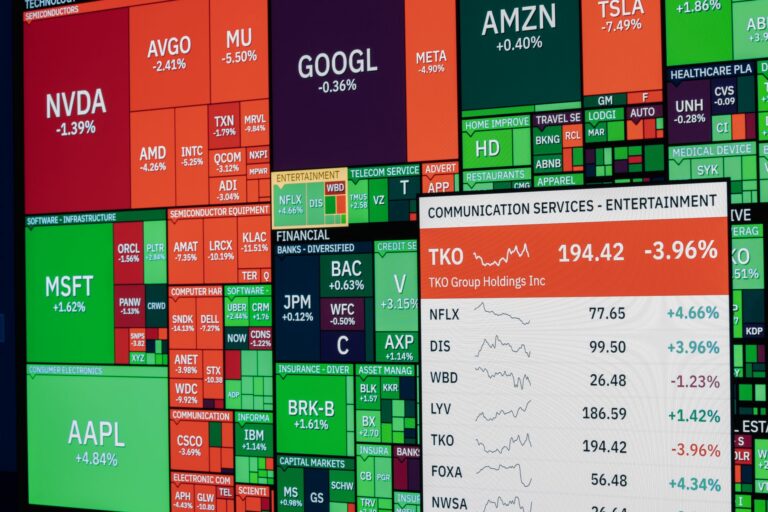
Fortune reported a sharp intraday dump in tech stocks before a partial recovery, a useful snapshot of the unstable equity tone across the session as Wall Street rotated through a volatile tech selloff. For traders following cross-asset pressure, I’d also keep an eye on our Nasdaq price analysis on yield-driven tech weakness, because gold is reacting to the same rate impulse, just through a different channel.
Haven demand is not controlling price action as liquidity pressure dominates the session.
The safe-haven bid is real in theory, but theory doesn’t pay. Price pays. The active tape says liquidity pressure is stronger than defensive demand.
That means traders should stop asking why gold “should” be up and start asking where forced selling can find the next pool of orders. Around $4,180, that pool is active. Under it, the $4,130 to $4,150 region becomes the obvious downside magnet.
Why Is Gold Selling Off During A Risk-Off Tape?
Higher rate risk is overwhelming the traditional safe-haven bid.
Gold does not yield. When Treasury yields sit near elevated levels, the market reprices the cost of holding a non-yielding asset. That is the clean macro pressure point here.
The US 10Y yield near 4.524% keeps a lid on gold because investors can demand compensation elsewhere. Even when fear rises, higher rate expectations can drain enthusiasm from metals. The result is messy but tradable: gold sells while volatility rises.
A Kitco PM Report carried by Bitget framed the same pressure clearly, noting that gold and silver slid as rate risk overwhelmed haven demand. I agree with that read. My opinion is that rates are the cleaner explanation today than any broad “dollar strength” story.
Headline risk aligns with the move as gold and silver slide while ETF redemption concerns add pressure.
The metals complex is not getting much help from sentiment headlines. Gold and silver are both under pressure, and ETF redemption concerns make the tone heavier because they raise the risk of mechanical selling rather than discretionary repositioning.
That distinction matters. A discretionary seller may step back when price gets extended. A forced seller often keeps hitting bids until the flow is done. That is why red candles in gold can stretch farther than retail traders expect, especially around crowded long positioning.
The tape suggests forced liquidation and positioning stress are stronger than defensive asset demand.
When I see gold falling with volatility rising, I look for signs of liquidation rather than a clean directional thesis. Stops get triggered. Levered longs reduce exposure. Short-term funds protect the week. The tape can become less about opinion and more about balance sheet pressure.
That is also where more market analysis becomes useful. One chart rarely tells the full story during liquidation. I want to know whether equities, yields, the dollar, and commodities are confirming the same stress or fighting each other.
What Is Driving XAU/USD More Than The Dollar?
The US 10Y Treasury yield near 4.524% is the cleaner macro driver for XAU/USD weakness.
DXY is near 99.92 and basically flat. That matters because a flat dollar removes the easy explanation. XAU/USD is not being crushed by a major dollar spike at the moment. The pain is coming from rates, positioning, and liquidity.
Gold traders love to anchor every move to the dollar. Sometimes that works. Today, the 10Y yield is the better read because it explains why a safe-haven asset can fall during a defensive session.
Higher real-rate risk pressures non-yielding gold by raising the opportunity cost of holding it.
The market does not need nominal yields to explode higher every hour for gold to struggle. Elevated rate risk is enough. When traders believe real-rate pressure can stay restrictive, gold has to compete against assets that pay something.
That is the opportunity cost problem. Gold is an insurance asset, a liquidity asset, and a macro expression. It is also a non-yielding position. When rate expectations tighten financial conditions, the insurance premium can get marked down.
DXY is steady near 99.92, making this less about a dollar spike and more about rates and liquidity.
A flat DXY near 99.92 keeps the XAU/USD read cleaner. EUR/USD is slightly higher near 1.1549, GBP/USD is slightly higher near 1.3389, and USD/JPY is steady near 160.43. That is not the profile of a broad dollar steamroller.
Gold weakness without a dollar surge tells me sellers are leaning on another lever. The lever is liquidity. Buyers are not absorbing supply around $4,180 with enough force, so price has to probe lower until real demand appears.
How Should Smart Money Concepts Frame $4,180?
The $4,180 area is the active gold liquidity battleground while price trades around it.
From a Smart Money Concepts trading framework, $4,180 is the battlefield because price is trading directly around it. That means the level is likely full of stops, breakout entries, failed dip buys, and short-term hedges.
I don’t treat $4,180 as magic. I treat it as a decision area. Buyers need to recapture it with intent. Sellers need to keep rejecting it. Until one side produces expansion away from the level, the zone remains noisy.
Failure to reclaim $4,180 keeps sellers in control and exposes the $4,130 to $4,150 demand zone.
A failure to reclaim $4,180 keeps intraday control with sellers. The next meaningful downside pocket sits around $4,130 to $4,150, which is close enough to spot to matter today.
That zone can attract profit-taking from shorts and fresh interest from buyers who missed the prior move. Still, demand is only confirmed by reaction. A level drawn on a chart is not support until price proves it can hold.
A reclaim above $4,220 to $4,240 would warn the decline was a liquidity sweep, not a fresh bearish leg.
A clean move back above $4,220 to $4,240 changes the read. That type of recovery would tell me the break around $4,180 may have been a stop-run rather than the start of a deeper bearish leg.
The quality of the move matters. A slow drift into $4,220 is weaker than a sharp expansion candle with follow-through. I want to see displacement, acceptance above the reclaimed area, and sellers failing to defend their prior breakdown.
Gold Trading Strategy: Do Not Chase The Red Candle
The cleaner setup is to wait for a displacement move before entering.
My gold trading strategy here is simple: don’t chase the red candle. Gold has already moved hard intraday, and entries taken after a 2.5% drop usually come with poor location.
I’d rather let price show its next hand. A bearish continuation setup needs a push away from $4,180, followed by a controlled pullback into supply. A bullish reversal setup needs an expansion back through the level, then acceptance above it.
Trading note: The best entry is rarely the most emotional entry. In rate-led liquidation, patience protects your account better than bravery.
Use the fair value gap or order block that forms around $4,180 for execution planning.
The execution plan should come from structure, not panic. Around $4,180, I’m watching for a fair value gap, a clean order block, or a failed mitigation attempt that gives a defined entry and invalidation.
For shorts, a weak retest below $4,180 that rejects from supply can offer a cleaner setup than selling the low. For longs, I need price to reclaim the zone and hold above it long enough to prove sellers are trapped.
That is where gold liquidity becomes tradable. The point is not to predict every tick. The point is to find where the market is likely to run orders, then wait for confirmation that the run has finished.
Define invalidation first because rate-led liquidation can extend faster than sentiment-based selling.
Rate-led selling can accelerate. That’s why invalidation comes before target selection. A trader who enters without knowing where the idea is wrong is not trading structure. They’re negotiating with a candle.
For a bearish setup below $4,180, invalidation may sit above the rejection high or above the supply area that created the next expansion lower. For a bullish reversal, invalidation belongs below the reclaim structure, not randomly below a round number.
Position size should reflect the volatility. Gold at $4,179.40 can move $30 to $60 quickly when liquidity thins. Small size with clean invalidation beats large size with hope.
Key Levels For XAU/USD Traders Today
Bearish control remains intact below $4,180 unless buyers produce a decisive reclaim.
Below $4,180, sellers still have the cleaner intraday argument. They have momentum, the macro driver, and the level. Buyers need more than a bounce. They need a decisive recapture that forces shorts to respond.
- Current XAU/USD spot: near $4,179.40
- Active battleground: $4,180
- Macro pressure: US 10Y yield near 4.524%
- Volatility backdrop: VIX near 21.02, up 5.8%
Downside liquidity sits toward the $4,130 to $4,150 demand zone if selling continues.
The $4,130 to $4,150 region is the downside area I care about next. It is close enough to attract price during the current session and far enough below spot to contain meaningful resting liquidity.
That does not mean price must go there. It means a continued failure at $4,180 leaves that pocket exposed. Traders should watch how price travels into it. Fast selling into the zone can create a sharp reaction, while slow grinding pressure can signal buyers remain passive.
Bullish reversal risk increases only after a clean break back above $4,220 to $4,240.
The upside line is $4,220 to $4,240. A break and hold above that band would challenge the bearish intraday read and raise the chance that today’s selloff was a liquidity grab.
Without that recovery, rallies are vulnerable. I’d rather miss the first bounce than buy into a level where trapped longs are waiting to exit and fresh shorts are waiting to reload.
For traders who want to compare gold with other commodity setups, our WTI crude oil analysis is useful because oil is trading higher near $89.02 while gold is under pressure. That divergence says the commodity complex is not moving as one block.
FAQ
Why is gold falling if markets are risk-off?
Gold is falling because rate risk is overpowering haven demand. With the US 10Y yield near 4.524%, traders are repricing the cost of holding non-yielding assets. The VIX is higher near 21.02, but the tape shows liquidity pressure and positioning stress matter more today.
Is this XAU/USD move driven by the dollar?
This move looks less like a pure dollar squeeze and more like a rates-led liquidation. DXY is steady near 99.92, so gold weakness is not coming from a major dollar spike. Higher yields, ETF redemption concerns, and forced de-risking are cleaner explanations.
What is the key gold liquidity level now?
The active battleground is $4,180 because price is trading around it and sellers are defending the breakdown. XAU/USD needs to reclaim that zone to ease immediate downside pressure. Until then, liquidity remains exposed toward the $4,130 to $4,150 demand zone.
Should traders short gold after the selloff?
Chasing the red candle is risky because the move may already be extended into liquidity. A better approach is to wait for displacement, then use the fair value gap or order block around $4,180 for a defined entry, stop, and invalidation.
What would turn the gold outlook bullish again?
A clean reclaim above $4,220 to $4,240 would warn that the selloff was a liquidity sweep rather than a new bearish leg. Bulls also need yields to stop dominating the tape and DXY to stay contained. Without that mix, rallies can keep running into supply.
For now, $4,180 is the line I’m watching. Does gold reject it again and hunt $4,130 to $4,150, or does XAU/USD recapture $4,220 to $4,240 and expose a failed breakdown?
Disclaimer: This analysis is for educational purposes only and is not financial advice. Trade with your own risk plan.