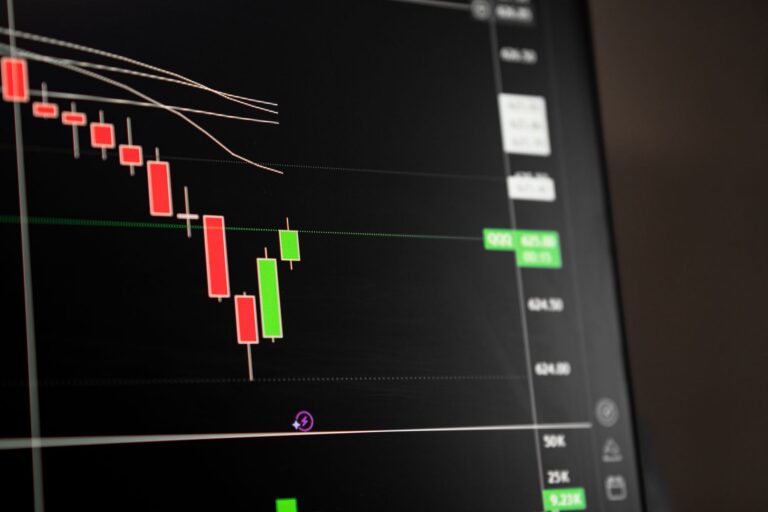

ETH is trading at $1,653, down 6.2% over the last 24 hours, and my Ethereum price analysis starts with the same thing I’d be watching on any risk-sensitive chart: where the forced sellers are likely sitting. The macro tape is hostile. DXY is bid at 101.30, VIX has jumped above 20, Nasdaq is down 1.3%, and Bitcoin is holding up better than ETH. That combination tells me the market is reducing crypto beta, not hunting for clean upside continuation yet.
For traders tracking broader digital asset setups, I’d keep this move in context with more crypto analysis, because ETH is rarely moving in isolation when volatility and the dollar are both pressing higher.
Ethereum Price Analysis: Why Is Ethereum Selling Off Today?
ETH trades at $1,653, down 6.2% in 24 hours, making it the strongest allowed mover on the day
Ethereum is the clear weak spot in the provided crypto snapshot. At $1,653, ETH is down 6.2%, while Bitcoin is down 4.4% at $62,203. That spread matters. A simple red day in crypto is one thing. ETH underperforming BTC while macro volatility expands is a more specific message: traders are cutting higher-beta exposure first.
I don’t treat a 6% ETH move as random noise when the rest of the macro board confirms stress. Gold is also lower, the Nasdaq is weaker, and the VIX has jumped sharply. The market is not rewarding speculative duration here. Ethereum sits directly in that bucket because it trades like a liquidity-sensitive growth asset during macro shocks, even when the long-term crypto narrative looks clean.
From a Smart Money Concepts lens, the selloff also makes sense because price is moving toward obvious sell-side liquidity. The $1,620 to $1,600 area is close enough to spot to matter, and it is the first zone where I’d expect stops, late shorts, and reaction buyers to collide.
Fed rate expectations are being repriced more aggressively after fresh Reuters coverage
The driver is not only crypto-native. Fed rate expectations are being repriced more aggressively after fresh Reuters coverage added to the market’s concern that policy may stay tighter for longer. Broader market coverage has echoed the same theme, with Fortune reporting that markets sold off as Fed expectations reset.
That matters because ETH thrives when liquidity is abundant and forward discount rates are falling. When traders start questioning the easing path, they reduce the value they are willing to pay for future growth, network optionality, DeFi beta, and altcoin rotation. Ethereum is not immune to that math.
My clear opinion: forcing longs into a Fed repricing event is usually bad trade selection unless the chart has already shown a real shift in order flow. Hope is not displacement. A wick is not confirmation. I want to see price take liquidity, reject lower pricing, and expand away from the level before I care about the long side.
Risk appetite is fading across high-beta markets as crypto follows broader macro stress
The current regime is risk-off. S&P 500 is down 0.4%, Nasdaq Composite is down 1.3%, and the Dow is slightly green at 51,713, up 0.3%. That split tells a useful story. Defensive or less rate-sensitive pockets are holding better, while growth and speculative assets are under pressure.
Crypto usually does not ignore that for long. ETH may have its own flows, staking dynamics, and on-chain narratives, but when macro funds reduce beta, Ethereum gets treated as a liquid risk asset. The market sells what it can sell. That is why the ETH risk off move looks sharper than the move in BTC.
I’ve seen this pattern often enough to respect it: when the dollar rises, volatility jumps, and tech weakens together, crypto bounces can look tempting but fail quickly. The first rebound is often a liquidity event, not a durable reversal.
How Are DXY Strength and the VIX Spike Pressuring ETH?
DXY strength at 101.30, up 0.3%, tightens financial conditions for speculative assets
DXY strength is one of the cleanest macro headwinds for Ethereum right now. The U.S. Dollar Index is at 101.30, up 0.3%, and that keeps pressure on global liquidity. A stronger dollar raises the bar for speculative assets because capital can sit in cash, short-duration instruments, or dollar-linked safety trades instead of chasing crypto volatility.
This is especially relevant for ETH because Ethereum often responds to marginal liquidity. It does not need a full-blown crisis to weaken. A firmer dollar, elevated yields, and weaker equities can be enough to push leverage out of the system.
For readers who map crypto against macro regularly, this is also where more market analysis becomes useful. ETH’s chart may print the candles, but the macro board often explains why those candles are expanding.
VIX spikes 16.8% to 20.18, confirming a risk-off backdrop
The VIX spike is the confirmation I care about. At 20.18, up 16.8%, volatility is no longer sitting in a comfortable risk-on zone. A VIX above 20 changes how I think about crypto entries. It means equity traders are paying up for protection, and when that happens, crypto rarely gets a free pass.
Volatility expansion creates two problems for ETH bulls. First, position sizing gets cut because risk models respond to wider expected moves. Second, traders become less patient with drawdown. That turns minor support breaks into sharper liquidations.
This is why I don’t want to front-run a low just because ETH is down 6.2%. In a calm tape, a selloff into support can be attractive. In a VIX-above-20 tape with DXY bid, the same setup demands stricter confirmation.
Nasdaq weakness of 1.3% reinforces pressure on high-beta crypto exposure
The Nasdaq Composite is down 1.3% at 26,167, and that matters more for ETH than the Dow being green. Ethereum trades closer to high-beta tech psychology than old-economy value psychology during macro repricing. When growth stocks are sold, ETH often feels the same pressure through risk-parity flows, leverage cuts, and reduced appetite for duration.
Investopedia’s market coverage also highlighted pressure on big tech while the Dow held firmer, which lines up with the current cross-asset split. That is not a friendly backdrop for altcoin risk.
The message is simple: ETH bulls need more than an oversold reading. They need proof that sellers are done pressing and that buyers are willing to absorb supply near the next liquidity zone.
ETH vs BTC: What Relative Weakness Signals
BTC is down 4.4% at $62,203 while ETH underperforms with a 6.2% decline
Bitcoin is trading at $62,203, down 4.4%, while ETH is down 6.2% at $1,653. That relative spread is bearish for Ethereum in the short term. During stress, BTC often acts as the higher-quality crypto collateral asset. ETH can still hold institutional interest, but in fast deleveraging windows, Bitcoin usually absorbs liquidity better.
Relative weakness does not guarantee ETH keeps falling in a straight line. It does tell me not to assume ETH will lead the rebound. In many risk-off sessions, the first bounce comes through BTC stability. ETH follows only after traders believe the liquidation pressure has cooled.
ETH risk off behavior signals weaker relative demand in the crypto beta trade
The phrase ETH risk off is clunky, but the behavior is clear. Ethereum is acting like the more sensitive leg of the crypto beta trade. When traders want upside, they reach for ETH and large-cap alt exposure. When they want liquidity, they reduce it.
That is what today’s tape looks like. The ETH/BTC relationship is showing weaker relative demand, and that usually keeps sellers interested on rallies. Any bounce into overhead imbalance near $1,700 to $1,760 needs to be judged against that backdrop.
For a recent comparison, the prior ETH selloff breakdown is worth reviewing because the same lesson applies: structure matters more than a single percentage drop.
Underperformance can persist while liquidity rotates away from higher-beta altcoin exposure
Underperformance can drag on longer than traders expect. When capital rotates away from higher-beta crypto, ETH may bounce but still lag BTC on a relative basis. That is why I separate trade location from trade direction. A good level can produce a reaction, but that does not make the broader trend bullish.
The current market structure still favors caution. ETH has lower-high and lower-low pressure, macro risk is elevated, and the dollar is firm. Until that mix changes, relief moves are more likely to be sold by traders who missed the first leg lower.
Fed Rate Expectations and Crypto Liquidity Conditions
The U.S. 10Y Treasury yield sits at 4.493%, keeping discount-rate pressure elevated
The U.S. 10Y Treasury yield is sitting at 4.493%. Even though it is slightly lower on the snapshot, the absolute level remains high enough to keep discount-rate pressure elevated. Crypto traders sometimes ignore yields until they suddenly matter. Today, they matter.
Higher yields compete with speculative assets by offering return without crypto volatility. They also reduce the present value of future cash flows and growth assumptions across risk assets. Ethereum does not have traditional earnings, but it still sits inside the same liquidity ecosystem.
Gold is down 1.6% at $4,135.70, and metals coverage has also pointed to Fed risk as a cap on upside, with Kitco commentary noting that Fed hike risk kept metals contained. When both gold and ETH are struggling, I pay attention. It tells me the issue is broader than one crypto headline.
A more hawkish Fed path can drain liquidity from crypto and other speculative assets
A more hawkish Fed path can drain crypto liquidity because it tightens the conditions that fuel leverage. Stablecoin deployment slows, carry trades become less attractive, and marginal buyers wait for cleaner discounts. That does not mean ETH has to collapse, but it does mean upside has a higher burden of proof.
Liquidity-sensitive assets need buyers willing to step in before the news improves. In this tape, those buyers are not obvious yet. The stronger dollar and elevated VIX suggest capital is still defensive.
No long bias should be forced while VIX stays above 20 and DXY remains bid
No long bias should be forced while VIX stays above 20 and DXY remains bid. That is the practical trading takeaway. A trader can still scalp, hedge, or wait for a liquidity raid, but the default assumption should not be that every dip deserves a bid.
For Smart Money traders, patience is the edge. I want to see where stops are clustered, how price behaves after taking them, and whether the next expansion candle shows actual sponsorship. For deeper work on that framework, review these SMC trading strategies.
Where Is the Next Crypto Liquidity Sweep on ETH?
SMC traders should watch whether ETH sweeps sell-side liquidity near $1,620-$1,600
The next crypto liquidity sweep I’m watching is near $1,620 to $1,600. That area is close to current price, obvious enough to attract attention, and likely packed with resting stops from late buyers. Obvious liquidity is not automatically support. It is fuel.
Price can raid that zone, print a sharp lower wick, and still fail if the reaction lacks follow-through. The key is what happens after the stop-run. Does ETH hold above the swept area? Does volume expand on the move away from the low? Do short-term lower highs get broken with intent?
A clean sweep followed by displacement would be needed before considering upside toward $1,700
A clean sweep followed by displacement would put $1,700 back on the board. That level is not far from spot, and it lines up with the lower edge of the overhead fair value gap I care about. The move into $1,700 would likely be a reaction trade first, not proof of a full bullish reversal.
If ETH takes $1,620 to $1,600 and immediately recaptures the breakdown area with strong expansion, I’d become more interested in the long side. That would suggest sellers may have achieved their liquidity objective and that trapped shorts could help push price higher.
Let liquidity get taken first instead of anticipating a reversal in a risk-off tape
Anticipating reversals in a risk-off tape is how good traders turn decent ideas into poor execution. Let the market do the dirty work first. Let the stops get taken. Let the candle close. Then judge whether buyers actually showed up.
That sequence matters because ETH is still trading inside macro pressure. A bounce from $1,620 to $1,700 can look good on a low timeframe, while the higher-timeframe sellers are waiting in the next imbalance. Location improves the trade. Confirmation protects the trader.
Bearish Continuation Levels to Watch
The $1,700-$1,760 fair value gap is the key rejection zone for continuation sellers
The $1,700 to $1,760 fair value gap is the zone I’d expect continuation sellers to defend. It sits above current price but still within a realistic rebound range for ETH. A push into that pocket would allow shorts to reload at better pricing while late longs chase relief.
For me, the cleanest bearish setup would be a liquidity grab below $1,620 to $1,600, a rebound into $1,700 to $1,760, then rejection with weak closes and lower-timeframe structure rolling over again. That would preserve the broader bearish path while offering a better entry than selling into the hole.
Lower-high and lower-low market structure keeps the bearish path cleaner
Market structure still leans lower. ETH is not showing a confirmed higher-high sequence from the current $1,653 area. Until it does, the path of least resistance remains toward liquidity below price, followed by any untested pockets sellers want to revisit.
Lower-high and lower-low structure does not mean every candle must be red. It means rallies deserve skepticism. Strong bearish trends often produce violent bounces, especially around round numbers and swept lows. The question is whether those bounces reclaim structure or simply rebalance price before another push lower.
A failed reclaim of the FVG would favor renewed downside pressure after any relief bounce
A failed reclaim of the $1,700 to $1,760 fair value gap would keep renewed downside pressure in play. Traders should watch the quality of the reaction there. Slow grind into the zone, muted buying, and rejection wicks would favor sellers. A decisive reclaim and hold above that area would weaken the bearish case and force a reassessment.
Until then, I’d rather be selective than heroic. ETH is down hard, but the macro tape is still sending the same message: dollar firm, volatility elevated, high-beta under pressure. The next high-quality trade probably comes after the liquidity event, not before it.
FAQ
What is the current Ethereum price analysis today?
Ethereum is trading near $1,653, down 6.2% in 24 hours. The move reflects a broader risk-off tape as Fed repricing lifts the dollar, pushes volatility higher, and pressures high-beta crypto assets more aggressively than Bitcoin.
Why is ETH underperforming Bitcoin right now?
ETH is down 6.2% while BTC is down 4.4% near $62,203, showing weaker relative demand in the crypto beta trade. In risk-off conditions, higher-beta assets often sell faster as traders reduce speculative exposure and seek liquidity.
How do Fed rate expectations affect Ethereum?
More aggressive Fed rate expectations typically tighten financial conditions by supporting yields and the U.S. dollar. With the 10Y Treasury yield near 4.493% and DXY firmer, liquidity-sensitive assets like Ethereum can face stronger downside pressure.
What ETH levels matter for SMC traders?
SMC traders should watch whether ETH sweeps sell-side liquidity near $1,620 to $1,600. A bullish reaction would need clear displacement back toward $1,700, while rejection from the $1,700 to $1,760 fair value gap keeps bearish continuation cleaner.
Should traders look for Ethereum longs here?
A long bias should not be forced while VIX is above 20 and DXY remains bid. The cleaner approach is to let liquidity get taken first, then wait for displacement, structure shift, or rejection before committing directional risk.
ETH can still produce a sharp relief bounce from nearby liquidity, but I want the market to prove demand before I trust it. Are buyers going to defend the $1,620 to $1,600 raid, or is the $1,700 to $1,760 gap simply the next sell zone?
Disclaimer: This analysis is for educational purposes only and is not financial advice. Trade with your own plan, risk controls, and independent research.