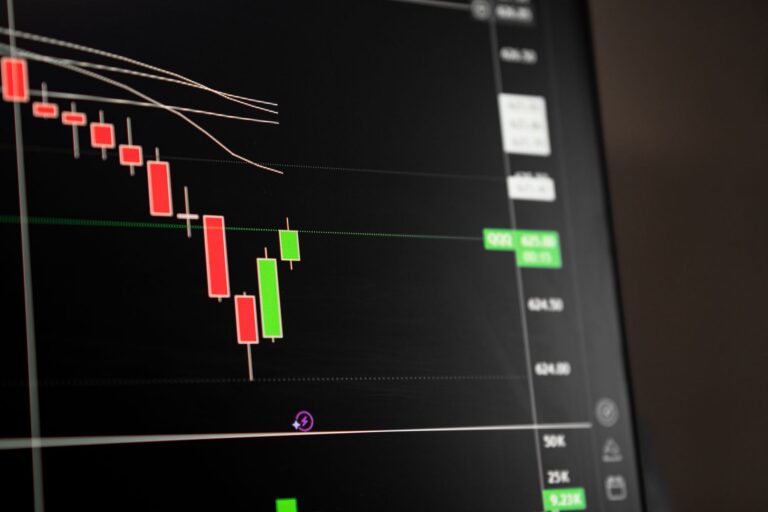

ETH is sitting at $1,656 after a 6.8% 24-hour drop, and that matters because the market is no longer pricing Ethereum like a quiet range. This ethereum price analysis starts with one fact: the breakdown is real on the tape, but the trade is not automatically to smash shorts at market. At this price, Ethereum is close enough to $1,600 downside liquidity and far enough below $1,700 supply that both sides have a clean battleground.
Bitcoin is also heavy at $61,910, down 2.8%, while the US Dollar Index is firm at 99.60. That mix tells me crypto is dealing with risk reduction, not isolated ETH weakness. CoinDesk described the current crypto slide as the market’s worst week since July 2024, which gives the move a headline catalyst without giving traders permission to ignore structure.
ETH Price Today: Why $1,656 Matters
ETH is trading at $1,656, down 6.8% in 24 hours
The current ETH price today is $1,656, down 6.8% over 24 hours. That is a meaningful intraday break because $1,656 now becomes the reference line for acceptance. Price trading below a level is one thing. Price building value below it is something else entirely.
I care about where candles close, not where panic prints for five minutes. A sharp move into $1,656 can trap late sellers if the next candles reclaim the level quickly. A clean acceptance below it, especially with expanding volume, tells a different story. That means sellers are not just reacting, they are controlling auction flow.
For traders who follow more crypto analysis, the key is to avoid treating every red candle as the same signal. Ethereum can drop hard and still be setting a trap. It can also bounce weakly and still be bearish. Context decides.
Today’s strongest listed mover during a broad risk-off crypto session
Across the listed market snapshot, ETH is the strongest mover by percentage, and not in a bullish way. Bitcoin is down 2.8%, gold is off 1.6%, crude is lower by 0.6%, and the Nasdaq is slightly negative. The S&P 500 is green by 0.4%, but that has not translated into support for crypto beta.
That divergence matters. When Ethereum underperforms Bitcoin during a crypto selloff, I read it as weaker relative demand. It does not mean ETH must collapse, but it does mean any long setup needs confirmation. A falling asset in a falling sector deserves skepticism until buyers prove they can move price with force.
CoinDesk’s worst-week-since-July-2024 headline as the selloff catalyst
The CoinDesk headline gives traders a clean narrative: crypto is under pressure near critical levels. Narratives matter because they influence positioning, especially among late retail traders who react after the move has already expanded.
Still, headlines do not execute trades. Structure does. I have seen this setup many times in crypto and forex: a scary headline pushes price through an obvious level, stops get triggered, liquidity transfers, and then the real direction appears after the first violent move. That is why the $1,656 area deserves patience.
My view: ETH is bearish below $1,656 only while it accepts below $1,656. A fast recapture changes the read from breakdown to possible stop-run.
Is The $1,656 Breakdown Continuation Or A Liquidity Sweep?
Continuation case: acceptance below $1,656 with expanding volume
The bearish continuation case is straightforward. ETH holds below $1,656, lower-timeframe rallies fail under that level, and sellers expand price toward $1,600. Volume should confirm the move. Thin drifting lower is weaker evidence than aggressive sell-side expansion.
Acceptance means more than one candle poking below support. I want to see price spend time below the level, reject attempts back through it, and create visible imbalance on the way down. That imbalance can show up as a fair value gap, a strong displacement candle, or a sequence of lower highs where buyers cannot reclaim the lost area.
Kitco also noted that Bitcoin’s bearish momentum has accelerated, which matters because ETH rarely ignores a weak BTC tape for long. Ethereum can outperform for short windows, but when Bitcoin leads risk lower, ETH bulls usually need a catalyst or a liquidity event to reverse the pressure.
Ethereum liquidity sweep case: fast reclaim after taking weak long stops
The ethereum liquidity sweep case is the trap scenario. Price breaks $1,656, triggers weak longs, pulls in breakout shorts, then snaps back above the level with urgency. That kind of raid is common around obvious intraday levels because liquidity pools cluster where everyone can see them.
A sweep needs speed. A lazy bounce after a slow bleed does not impress me. A proper stop-run usually shows a sharp wick, a fast close back above the broken level, and immediate pressure into the next short-term supply zone. The strongest versions do not give late shorts much time to feel comfortable.
If ETH snaps back above $1,656 and holds there, the breakdown loses quality. The next question becomes whether buyers can attack $1,700, where the first major reclaim test sits.
How to read wick behavior, candle closes, and lower-timeframe displacement
Wicks show where price searched for liquidity. Candle closes show where the market accepted value. Displacement shows which side had actual initiative. That sequence is more useful than guessing from a single candle.
A long lower wick below $1,656 followed by a close back above the level tells me sellers may have been used as fuel. A heavy close below $1,656 with little rejection says the market accepted lower. A lower-timeframe expansion candle back above the broken level, especially after a failed push lower, is the first clue that shorts are losing control.
This is where SMC trading strategies help, because they force the trade idea to answer a simple question: who got trapped, and where is the next liquidity draw?
Ethereum Price Analysis: What Would Confirm Sellers Are Losing Control?
A reclaim toward $1,700 is the first bullish warning signal
The first bullish warning signal is a move back toward $1,700. That does not mean ETH becomes bullish the moment it touches $1,700. It means sellers failed to keep price pinned under the breakdown area.
The $1,700 handle is close enough to current price to matter intraday, and it sits inside the zone where trapped longs, fresh shorts, and reactive sellers are likely to make decisions. A clean drive into that area changes the pressure profile. Shorts opened late below $1,656 may start covering, while aggressive bulls may look for confirmation of a failed breakdown.
Confirmation requires displacement, volume, and a break in bearish microstructure
For sellers to lose control, ETH needs more than a bounce. I want to see expansion through short-term highs, volume participation, and a break in bearish microstructure. A market can retrace 30 or 40 dollars and still remain completely bearish.
Microstructure matters because it shows whether the trend has changed at the execution level. Lower highs and lower lows favor sellers. A break above the last lower high, followed by a successful retest, starts to challenge that control. The best reversals usually leave shorts stranded below the reclaimed level.
For broader context across indexes, FX, and commodities, I’d keep an eye on more market analysis. ETH is a crypto asset, but the dollar, tech risk, and Bitcoin’s direction all feed the same risk appetite machine.
Why a slow grind back to $1,700 is not enough
A slow grind into $1,700 can be dangerous for bulls. It often gives sellers plenty of time to reload into better prices. Strong reversals usually move with urgency because they are powered by trapped positioning.
Weak recovery candles into supply are often just a retracement. That is especially true after a 6.8% daily drop, where plenty of traders are waiting to sell the bounce rather than chase the breakdown. My opinion is simple: unless ETH returns to $1,700 with intent, the level is more likely to act as resistance than confirmation.
Downside Liquidity Map: $1,600 And $1,525
The $1,600 area as the nearby downside liquidity magnet
The $1,600 area is the obvious downside liquidity magnet. Round numbers attract stops, limit orders, and emotional decisions. With ETH at $1,656, that level is close enough to be relevant without requiring a major new leg lower.
Many traders who bought near the recent breakdown will have risk parked somewhere around $1,600. Short sellers also know that. That creates a likely draw for price if the market continues to accept below $1,656.
MarketWatch has also pointed to caution around equities ahead of the jobs report as tech enthusiasm dulls. Crypto does not need equities to fall every time it sells off, but a cautious macro tape rarely helps ETH recover cleanly.
Clean break scenario: continuation risk toward roughly $1,525
A clean break below $1,600 opens the door toward roughly $1,525. I would treat that as a continuation target zone, not a guaranteed destination. Markets move from liquidity to liquidity, and the path matters.
The clean version would show ETH break $1,600, retest it from below, and fail to reclaim. That would confirm the former liquidity magnet has turned into resistance. From there, sellers can press toward deeper resting liquidity near $1,525.
Chasing the first touch of $1,600 is lower quality. The better read comes after the touch. Does price expand through the level, or does it raid it and return above? That answer separates continuation from a bear trap.
Invalidation signs if price sweeps $1,600 but fails to accept lower
Price can sweep $1,600 and still reject lower prices. That would weaken the bear case, especially if the move leaves a long wick and closes back above the round number. The stronger the rejection, the more dangerous late shorts become.
A failed acceptance below $1,600 would shift attention back toward $1,656 first, then $1,700. Bulls do not need to win the whole chart at once. They need to reclaim the levels that prove sellers lost the auction.
Bearish Ethereum Order Block Between $1,700 And $1,750
Why $1,700-$1,750 is the key bearish intraday order block
The $1,700 to $1,750 zone is the key bearish ethereum order block on my intraday map. It is close to the first reclaim level, it sits above the current breakdown area, and it likely contains supply from traders who missed the first short or want to defend the move lower.
This zone matters because bearish moves often retrace into the last area of aggressive selling before continuing. Sellers who are patient want price to come back to them. That gives better risk control than entering after a vertical drop.
Short setup criteria: retrace, rejection, and lower-timeframe market-structure shift
The short setup needs three parts: retrace, rejection, and lower-timeframe shift. ETH should trade back into the $1,700 to $1,750 area, show rejection, then break minor bullish structure created during the bounce.
That final shift is the filter. Without it, a trader is guessing that resistance will hold. With it, the market has started to confirm sellers are active again. I prefer waiting for that extra information, even if it means missing the exact top of the retracement.
A clean rejection from the zone can target $1,656 first, then $1,600. The deeper $1,525 area only becomes attractive after sellers prove they can break and hold below $1,600.
Risk controls if ETH displaces through the order block instead
If ETH displaces through $1,750 with volume, the bearish setup loses quality fast. Supply that fails to reject price is no longer useful resistance. It becomes a warning that shorts are trapped and the market may be repricing higher.
Stops for shorts should not be emotional. The invalidation belongs beyond the structure that justified the trade, not at a random dollar amount. Traders using wider stops need smaller size. Traders using tight stops need clean execution. No exceptions.
SMC Trade Plan: Do Not Chase The Red Candle
Wait for a fair value gap retest before considering continuation shorts
The red candle already happened. Selling late after a 6.8% ETH drop is usually a poor habit unless the structure offers a fresh entry. A fair value gap retest can provide that structure because it gives price a reason to rebalance before continuation.
For a continuation short, I want price to retrace into imbalance, struggle, and then rotate lower. That keeps risk defined. It also avoids the worst version of trading, which is entering because the screen looks scary.
Use a failed reclaim as confirmation, not prediction
A failed reclaim is useful because it shows buyers tried and failed. Around $1,656, that means ETH attempts to regain the level, stalls, and turns lower again. Around $1,700, it means the market reaches the first bullish warning zone but cannot build acceptance.
The failed reclaim is not a prediction tool. It is confirmation that a level is being defended. That difference matters. Prediction makes traders early. Confirmation makes them selective.
Align entries with crypto market structure instead of emotional momentum
Crypto market structure is the anchor here. Below $1,656 with acceptance, ETH remains vulnerable toward $1,600. A sweep and reclaim of $1,656 puts pressure back on shorts. A powerful move through $1,700, then $1,750, would force me to step away from the bearish intraday read.
For traders tracking Bitcoin alongside ETH, the broader crypto read still matters. You can also compare current Ethereum weakness with prior BTC-led risk phases through pieces like Bitcoin ETF flow analysis, but do not let another asset override what ETH is printing on its own chart.
The plan from here is simple. Let Ethereum show whether $1,656 is acceptance or a trap. Respect $1,600 as the next liquidity test. Treat $1,700 to $1,750 as the supply zone that decides whether the bounce is tradable or just another short opportunity. What are you watching first, the $1,600 sweep or the $1,700 reclaim?
FAQ
What is the current ETH price today?
ETH is trading near $1,656, down 6.8% over 24 hours, making it the strongest listed mover in the snapshot. The move fits a broader risk-off crypto tape as headlines point to the market’s worst week since July 2024, adding urgency to intraday Ethereum analysis.
Is the $1,656 move a bearish continuation breakdown?
Not automatically. A breakdown is bearish when price accepts below $1,656, creates clean imbalance, and rejects reclaim attempts. A quick recovery back above the level with volume would point more toward an Ethereum liquidity sweep below weak longs than true continuation.
What level should bulls reclaim first?
The first meaningful reclaim level is around $1,700. Bulls need more than a weak bounce; they need displacement, volume, and a lower-timeframe market-structure shift. Without that, any push toward $1,700 can become a retracement into fresh sell-side supply.
Where is the next downside liquidity for Ethereum?
The nearby downside liquidity magnet is the $1,600 area. A clean break and acceptance below it can open continuation toward roughly $1,525. Traders should watch whether price expands lower or sweeps liquidity and quickly returns back above the level.
How should traders use the $1,700-$1,750 order block?
The $1,700 to $1,750 zone is the key bearish order block to monitor on a retrace. Short setups are stronger after rejection, a failed reclaim, or a confirmed lower-timeframe shift. A high-volume displacement through the zone reduces the quality of the bearish setup.
Disclaimer: This article is educational market commentary, not financial advice. Trade with your own plan, risk controls, and independent judgment.