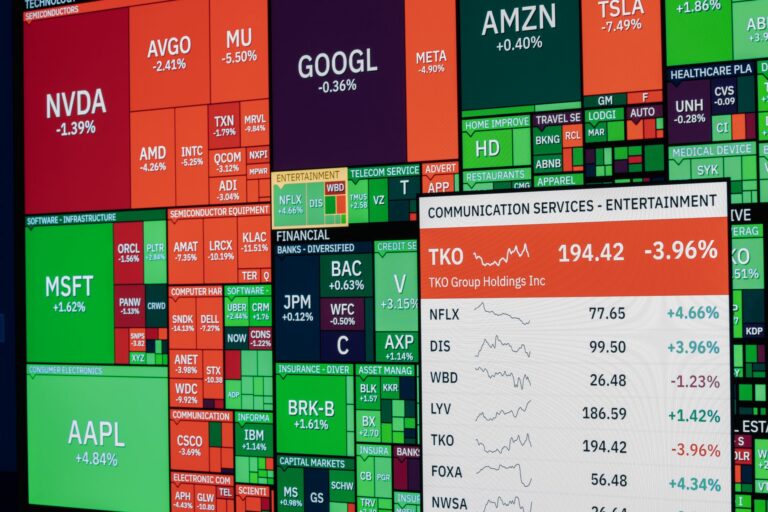
Nasdaq Composite is trading near 25,691, down 0.6%, and the tape has a clear message: growth is being repriced while oil, yields, and volatility move against risk. My Nasdaq analysis starts with that pressure, because a 4.6% jump in WTI crude to $90.86 and a 10-year Treasury yield at 4.705% are not background noise. They change the bid under Big Tech.
The S&P 500 is almost flat near 7,499, the Dow is barely changed around 52,219, and the Nasdaq is carrying the heavier load. That tells me this is selective selling, not broad liquidation yet. But with VIX at 18.96, up 13.9%, traders are paying for protection. That matters.
Nasdaq Analysis Snapshot: Risk-Off Tape At 25,691
Intraday Read: Nasdaq Composite Near 25,691, Down 0.6%
The Nasdaq Composite near 25,691 is soft, but not broken across every timeframe. The immediate read is pressure, with sellers leaning on growth exposure while buyers wait for earnings clarity. The current decline of 0.6% is meaningful because it is happening alongside rising oil, higher Treasury yields, and a volatility bid.
That combination makes the session less forgiving. In a cleaner risk-on market, a 0.6% dip can attract fast dip buyers. In this tape, the same dip can become a liquidity grab lower if buyers fail to defend the nearby structure. I’d rather see proof of absorption than assume institutions are stepping in just because price is red.
Relative Strength: Strongest Allowed Mover Outside Commodities And Crypto
Relative strength is mixed. Nasdaq is weaker than the S&P 500 and Dow, but it is not in free fall. Bitcoin is down 0.6% near $65,180 and Ethereum is down 0.7% near $1,903, so speculative risk is not getting a clean bid either. Gold is lower by 2.0% around $4,069.10, which adds another wrinkle because traditional haven demand is not dominating the flow.
The strongest move is in WTI crude. That is the asset setting the tone. When oil jumps 4.6% to $90.86, equity traders start thinking about inflation, margins, transport costs, and central bank reaction functions. For more context on the energy side of the tape, I’d keep an eye on this WTI crude oil breakout analysis.
Volatility Signal: VIX At 18.96, Up 13.9%, Shows Demand For Protection
VIX at 18.96 is not panic, but the 13.9% rise is enough to change how I trade the index. A rising volatility index means options desks are repricing risk and market makers may become less willing to provide smooth liquidity. That can produce sharper intraday wicks, faster stop-runs, and uglier failed breakouts.
For Nasdaq traders, that means entries need more discipline. A reclaim that holds matters more than a single green candle. A support tag with no reaction is just a price touch. I covered a similar volatility-led growth stock pressure setup in this Nasdaq selloff and VIX spike breakdown, and the lesson is the same here: respect volatility when it expands.
Why Is The Nasdaq Slipping While Oil Spikes?
WTI Crude At $90.86, Up 4.6%, Revives Inflation Risk
WTI crude at $90.86, up 4.6%, is the main macro shock in the session. Higher crude does not hit every Nasdaq company the same way, but it changes the inflation conversation quickly. Logistics costs rise. Consumer spending assumptions get tested. Rate-cut hopes become harder to price with confidence.
Investopedia reported mixed indexes, a softer Nasdaq, higher oil prices, and rising Treasury yields, which lines up with the live cross-asset read. That is exactly the kind of combination that pressures high-multiple technology stocks before major earnings.
Middle East Escalation Keeps Margin And Energy-Cost Fears Alive
Energy markets are also trading geopolitical risk. MarketWatch linked the session’s equity pressure to oil prices, US-Iran headlines, and Alphabet and Tesla earnings on deck. I treat those headlines carefully. They can create fast moves, but the real test is whether the move gets accepted after the first emotional reaction.
For Big Tech, the problem is forward guidance. Investors can tolerate a noisy quarter when the macro backdrop is stable. They become less generous when oil is spiking and rate markets are firm. A management team talking about higher costs, slower enterprise demand, or cautious spending can quickly turn a decent earnings print into a sell-the-news event.
Risk-Off Market Conditions Favor Defense Over Growth Exposure
The regime is risk-off, and that changes the playbook. Defensive exposure gets favored. Growth gets questioned. High-duration cash flows get discounted more aggressively. That does not mean the Nasdaq has to collapse, but it does mean rallies need confirmation instead of applause.
My opinion is simple: this is not a tape for blind dip buying. There may be great long setups, but they need structure, participation, and clean invalidation. Chasing a bounce just because the Nasdaq is down 0.6% is weak process.
How Do Treasury Yields And DXY Pressure Big Tech?
10-Year Treasury Yield At 4.705% Pressures Long-Duration Growth Names
The 10-year Treasury yield at 4.705%, up 1.0%, is a direct headwind for long-duration growth stocks. Big Tech valuations depend heavily on future earnings power. When yields rise, the discount rate applied to those future cash flows rises as well, making expensive names more vulnerable to multiple compression.
That is why Nasdaq rallies can look healthy for 20 minutes and still fail near intraday supply. The math behind valuation is fighting the chart. Traders who ignore rates often get surprised when a technically clean bounce stalls into the first major offer.
Firmer DXY At 101.36 Adds A Headwind For Multinational Tech Earnings
The US Dollar Index is firmer at 101.36, up 0.2%. That may look small, but it matters for multinational technology companies. A stronger dollar can reduce the value of overseas revenue when translated back into US dollars, and guidance teams know investors will ask about FX sensitivity.
EUR/USD is down 0.2% near 1.1385, GBP/USD is down 0.2% near 1.3341, and USD/JPY is higher by 0.3% near 163.65. The currency tape is not screaming crisis, but it is not helping growth either. A firm dollar plus higher yields usually means Nasdaq bulls need earnings to do more work.
Why Higher Yields Keep Nasdaq Rallies Fragile Without Confirmation
Higher yields make every rebound more fragile until price proves otherwise. I want to see displacement through resistance, a hold above the reclaimed area, and follow-through from the large-cap leaders. Without that, a bounce is just inventory getting marked up before another supply test.
For readers who trade through Smart Money Concepts, the cleanest approach is to define liquidity pools first and wait for price to either reject them or accept above them. I break down that framework regularly in our SMC trading strategies section, because it keeps traders from turning every candle into a prediction.
Market Structure Levels: 25,650 And 25,850
Acceptance Below 25,650 Risks A Liquidity Run Toward 25,500
The key downside level is 25,650. With the Nasdaq Composite trading near 25,691, that level is close enough to matter immediately. A clean break is less important than acceptance. Sellers need to hold price below 25,650 and prevent a fast recapture.
If price accepts below 25,650, the next risk is a liquidity run toward 25,500. That area is close enough to attract stops from late longs and short-term traders who bought the first dip without waiting for reaction. In a risk-off market, those stop pools can get raided quickly.
Reclaiming 25,850 Would Ease Immediate Downside Pressure
The upside level is 25,850. A move back above 25,850 would not magically erase the macro pressure, but it would show buyers absorbing supply and forcing shorts to reassess. That is the first sign I’d want before talking about a cleaner relief bid.
There is a big difference between price wicking into 25,850 and actually holding above it. A strong reclaim should show buyers defending the level on retest, not simply chasing an earnings headline or a sudden oil reversal. The close of the reaction matters more than the first burst.
Avoid Calling Support Until Price Shows Acceptance And Reaction
Support is earned. Traders call levels too early because they want certainty. The market gives evidence, not certainty. Around 25,650, I want to see how price behaves: does it reject quickly, grind below, or flush and reverse?
In my own trading, the best intraday index decisions usually come after the first obvious move has already trapped one side. The initial sweep tells me where liquidity sat. The reaction tells me whether larger players cared. That observation has saved me from plenty of low-quality entries.
Key tape read: Nasdaq near 25,691 is sitting between pressure and potential relief. Below 25,650, sellers gain room. Above 25,850, buyers start to repair the short-term structure.
Can Big Tech Earnings Change The Tape?
Alphabet And Tesla Earnings Are The Session Catalyst
Alphabet and Tesla earnings are the obvious catalyst. The market is already positioned nervously, so the reaction may be sharper than the headline numbers alone justify. EPS and revenue matter, but the tape will likely care more about forward commentary.
Alphabet carries weight through advertising, cloud, AI spending, and margins. Tesla carries weight through demand, pricing, margins, autonomy commentary, and capex expectations. Together, they can shift sentiment across the Nasdaq Composite because traders use them as proxies for growth appetite.
Macro Conditions Say Buyers Need Confirmation, Not Hope
Buyers need confirmation because the macro backdrop is not friendly. WTI at $90.86, the 10-year yield at 4.705%, DXY at 101.36, and VIX at 18.96 create a tight filter for bullish interpretation. Good earnings may still work, but weak guidance can get punished fast.
If earnings spark a rally, I still want to see 25,850 reclaimed and defended. That is the difference between a headline squeeze and a structure shift. Without that hold, the move risks becoming another liquidity event into waiting supply.
Watch Guidance, Margins, Capex, AI Spend, And Demand Commentary
The market will watch guidance, margins, capex, AI spend, and demand commentary. That is the one clean checklist I care about. AI spending is especially important because investors want growth, but they also want evidence that spending is turning into durable revenue and operating leverage.
Margins may decide the reaction. In an oil shock tape, any hint of cost pressure gets amplified. Demand commentary matters too, especially around enterprise budgets and consumer resilience. The Nasdaq does not need perfection, but it does need enough strength to offset the macro drag.
Trading Plan For A Risk-Off Market
Use Market Structure First: Levels, Acceptance, And Liquidity Runs
The trading plan starts with structure. I am watching 25,650 as the downside trigger area and 25,850 as the upside repair level. Between those zones, the tape can chop. That middle can be expensive for traders who overtrade every five-minute candle.
Acceptance below 25,650 keeps downside risk active toward 25,500. A recapture of 25,850 eases immediate pressure and may force short covering. Until one side gains control, smaller size makes sense. The goal is to survive the noise long enough to catch the cleaner expansion.
Separate Headline Spikes From Confirmed Reclaims
Headline spikes are common around earnings, oil headlines, and geopolitics. They are also dangerous. A fast green candle after a news alert does not automatically mean institutions are accumulating. Sometimes it is just stops getting lifted before price returns to the prior range.
A confirmed reclaim looks different. Price pushes through the level, holds above it, and attracts follow-through instead of fading immediately. That is why I care about acceptance. It filters emotion. For broader index work beyond this session, the market analysis archive is useful for comparing how these risk-off setups evolve over multiple tapes.
Risk Management: Smaller Size, Clear Invalidations, No Blind Dip Buying
Risk management matters more when VIX jumps. Smaller position size is not fear. It is math. Wider candles and faster reversals require either wider stops, smaller exposure, or both. Traders who keep normal size in abnormal volatility usually learn the hard way.
If price loses 25,650 and fails to reclaim it, long exposure should be questioned quickly. If price recaptures 25,850 and holds, shorts need to respect the shift. The invalidation should be visible before the trade goes on, not invented after the trade moves against you.
My clear view: the Nasdaq can recover, but it has to prove it through structure. Oil, yields, and volatility are applying pressure now. Earnings can change the tone, but only confirmed buying above key levels should change the plan.
FAQ
What is driving today’s Nasdaq analysis?
The Nasdaq Composite is slipping near 25,691 as crude oil jumps, the 10-year Treasury yield rises to 4.705%, and the VIX climbs to 18.96. That combination signals a risk-off market where traders are reducing growth exposure before key Alphabet and Tesla earnings.
How do higher treasury yields affect the Nasdaq Composite?
Higher Treasury yields raise the discount rate used to value future earnings, which weighs most on long-duration growth stocks. With the 10-year yield at 4.705%, Nasdaq rallies can fade quickly unless earnings guidance offsets the macro pressure and buyers reclaim stronger intraday structure.
What Nasdaq levels matter most now?
Immediate market structure centers on 25,650 and 25,850. Acceptance below 25,650 would increase downside risk toward a 25,500 liquidity run, while reclaiming 25,850 would ease pressure and show buyers are absorbing the risk-off supply instead of only chasing late headlines.
Why does oil matter for Big Tech earnings?
Oil matters because WTI near $90.86 raises inflation fears, squeezes margins, and keeps central bank policy concerns alive. For multinational technology companies, higher energy costs and a firmer DXY can pressure guidance, making Big Tech earnings reactions more sensitive to forward commentary than headline EPS.
Is this a buy-the-dip setup?
Not automatically. In a risk-off tape with VIX up 13.9%, crude spiking, and yields rising, dip buying needs confirmation. Traders should watch whether Nasdaq Composite price holds above 25,650 and can reclaim 25,850 before assuming a durable relief bid today.
The next clean signal comes from how price behaves around 25,650 and 25,850 after the earnings headlines hit. Are buyers going to defend structure, or is the market setting up another stop-run toward 25,500?
Disclaimer: This article is for educational purposes only and is not financial advice. Trade with your own risk plan.