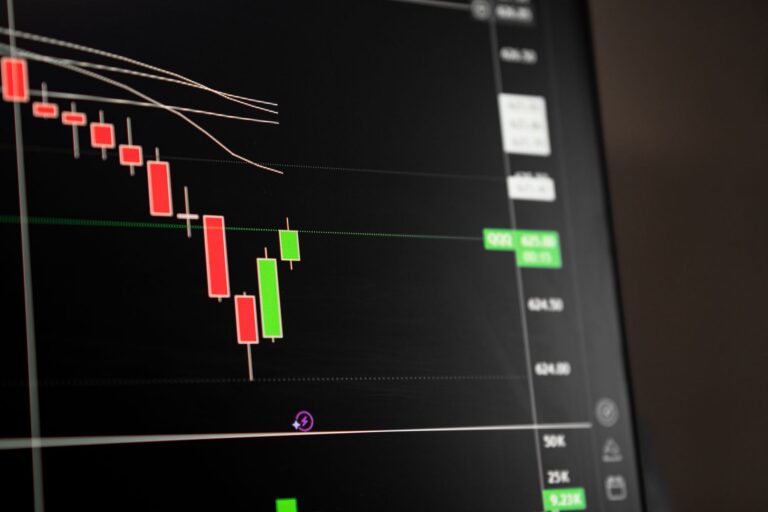
Gold is trading at $4,483.60, up 1.0% intraday, and that matters because price is sitting right on top of the $4,480 decision area before CPI. My gold smc analysis is simple here: XAU/USD has macro support from softer yields and a weaker dollar, but the nearby liquidity makes this a dangerous place to chase.
Gold Leads as Yields and DXY Ease
XAU/USD trades at $4,483.60, up 1.0% intraday and the strongest allowed mover today
XAU/USD is the standout asset in the live snapshot, trading at $4,483.60 and up 1.0% intraday. That makes gold the strongest allowed mover on the board, ahead of major equity indices, the dollar complex, crude, Bitcoin, and Ethereum. Strength into a major inflation release deserves respect, but it also deserves skepticism around execution. CPI days are notorious for making clean-looking levels behave dirty.
The move is not happening in isolation. Gold is pressing higher while equities are soft, the dollar is lower, and yields are easing. For broader context on how I frame these setups across assets, I keep the process consistent with the same playbook used in more market analysis. The asset changes. The liquidity logic doesn’t.
US 10Y Treasury yield falls 0.6% to 4.658, easing a key macro headwind for gold
The US 10Y Treasury yield is at 4.658, down 0.6%. That matters because higher yields usually pressure gold by raising the opportunity cost of holding a non-yielding asset. When yields cool, gold gets breathing room. I don’t treat that as a standalone buy signal, but I do treat it as permission for bullish order flow to hold longer than it otherwise might.
This is the core of the dollar yield gold relationship right now. Lower yields reduce one drag, while a softer dollar reduces another. When both move together, gold can extend even without a crisis bid.
DXY softens to 99.64, down 0.2%, supporting pre-CPI demand for bullion
DXY is trading at 99.64, down 0.2%. That is modest, but it is enough to support bullion while price is already bid. A weaker dollar makes gold cheaper in relative terms for non-dollar buyers, and it also signals that traders are not aggressively hiding in USD before the CPI release.
Pre-CPI positioning can be fragile, though. A soft DXY print before the data does not prevent a violent dollar squeeze after the number. That is why the $4,480 area is so important. It is close enough to spot to attract participation, stops, breakout entries, and failed-breakout traps all at once.
Why Is XAU/USD Strong Before CPI?
Dollar yield gold pressure eases as both Treasury yields and DXY move lower into the release
The current bid in gold looks macro-supported. Treasury yields are lower, DXY is weaker, and XAU/USD is holding near $4,483.60. That combination tells me gold buyers are not fighting the entire macro tape. They still have to survive CPI, but they are entering the event with tailwinds rather than headwinds.
Market commentary has also been focused on inflation jitters and Fed uncertainty, with Simply Wall St. noting pressure around S&P 500 futures tied to inflation and policy uncertainty. That is the right backdrop for gold volatility. Inflation data directly affects yields, Fed expectations, the dollar, and metals pricing.
Gold strength appears macro-driven rather than panic-driven, with VIX contained at 15.03
VIX is at 15.03, down 1.6%. That does not look like a market running for shelter. My read is that gold strength is more macro-driven than panic-driven. There is caution in the tape, but not disorder.
That distinction matters for SMC traders. Panic moves often ignore neat mitigation zones and rip through structure. Macro positioning moves can still respect imbalance, order blocks, and liquidity pools, at least until the release hits. After years of trading CPI sessions across FX and metals, I’ve learned to separate the pre-data structure from the post-data mess. They are related, but they are not the same trade.
Mixed-to-weak equities add caution, but the move is not currently a broad fear bid
The S&P 500 is trading at 7,728, down 0.3%. Nasdaq is at 26,445, down 0.6%. Dow sits at 53,792, down 0.3%. Those are defensive readings, but not a crash tape. Bitcoin is also soft at $64,066, down 0.4%, while Ethereum is higher at $1,909, up 1.1%, which reinforces the mixed regime.
That mixed backdrop supports caution rather than panic. Gold can keep leading if yields and DXY stay soft, but I would not call the current bid a full safety scramble. A recent broad-market live update from TS2 tracked the same kind of live cross-asset conditions investors are watching into the session, which is exactly why confirmation across rates, FX, and equities matters here.
Where Is the Live XAU/USD Liquidity Zone?
XAU/USD liquidity is concentrated around the $4,480 decision area as price trades nearby
The live XAU USD liquidity zone is clustered around $4,480 because spot is only a few dollars above it. That is close enough to matter on intraday charts. Traders who bought the breakout want that zone to hold. Short sellers want a failed acceptance back below it. Late buyers are staring at the same area, wondering whether the move has already gone.
That is exactly why $4,480 is not just a line on a chart. It is a decision area. A clean hold above it keeps bullish structure alive. A rejection after taking liquidity above it can flip the tone quickly.
Watch for acceptance above $4,480 versus a buy-side sweep and immediate rejection
Acceptance above $4,480 means price trades above the area, expands with intent, and does not immediately collapse back through the level. I want to see lower-timeframe structure support the move, not just a one-minute candle with a long wick and volume spike.
A buy-side grab is different. Gold may trade through nearby highs, trigger breakout orders, fill resting liquidity, and then snap back below the level. That kind of rejection is especially common around CPI because algos hunt both sides before the real leg develops. My opinion: chasing the first CPI candle is a low-quality habit. It feels active, but it usually gives up control.
Avoid assuming support or a retest unless price confirms with displacement and structure
The mistake I see retail traders make is calling $4,480 support simply because price is above it. That is not enough. Support is earned through reaction, expansion, and defended structure.
For traders who want a deeper framework, the same logic applies across SMC trading strategies. A level becomes tradable when order flow validates it. Until then, it is only a candidate. Gold order blocks near the area matter only after price shows respect through displacement, mitigation, and continuation.
Gold SMC Analysis Map: Acceptance vs Buy-Side Sweep
Bullish case: clean acceptance above $4,480 with sustained displacement and protected higher lows
The bullish scenario is straightforward. Gold holds above $4,480, prints sustained expansion, and protects higher lows on the lower timeframes. That would suggest buyers are absorbing supply rather than simply reacting to a soft dollar.
In that case, I want to see pullbacks remain controlled. A bullish market does not need to move vertically forever. It needs to avoid giving back the decision zone with force. A shallow mitigation into a clean bullish order block, followed by renewed expansion, would be far healthier than a straight-line spike that leaves poor structure behind.
Reversal case: sweep of buy-side liquidity followed by a lower-timeframe market structure shift
The bearish reversal map starts with a raid. Price trades above nearby highs around the decision area, attracts breakout traders, then rejects hard enough to break lower-timeframe structure. That shift would warn that the upside liquidity has been used, not defended.
From there, the cleaner short setup is usually not the wick itself. It is the return into a supply zone or bearish order block after structure has changed. That gives the trader a defined invalidation point instead of guessing during the fastest part of the move.
Execution filter: wait for mitigation into gold order blocks instead of chasing CPI candles
The gold CPI setup should be executed with patience. CPI candles can print wide ranges, fill both sides of liquidity, and make a good idea look terrible because the entry is poor. Waiting for mitigation into gold order blocks gives the trade a structure-based reason to exist.
That does not mean every order block works. Most don’t. I only care about zones created by real displacement, preferably after a liquidity event. A lazy consolidation box marked as institutional demand is not enough for me, especially with XAU/USD trading near $4,483.60 before an 8:30 a.m. ET catalyst.
Gold CPI Setup for the 8:30 a.m. ET Release
Hot CPI scenario: yields and DXY may rebound, increasing risk of a sharp XAU/USD reversal
A hot CPI print can push yields higher and lift the dollar. That would put immediate pressure on gold because the current bullish case partly depends on lower yields and softer DXY. With the 10Y already at 4.658 and DXY at 99.64, a reversal in both can hit XAU/USD quickly.
The main danger is a false upside continuation into the number, followed by a violent rejection through $4,480. Traders who buy strength without a plan can get trapped in that rotation. I would rather miss the first move than be stuck defending a bad fill during the data shock.
Soft CPI scenario: yields may ease further, helping gold extend if liquidity holds above the zone
A soft CPI reading can push yields lower and weaken the dollar further. That would support gold continuation, especially if XAU/USD holds above the $4,480 area after the initial volatility. In that environment, bullish mitigation zones may become more attractive because macro and structure would be aligned.
Continuation still needs proof. A soft headline alone is not enough. The better signal is post-release expansion that holds, followed by a controlled pullback into a defended area. For additional gold-specific context, the prior Gold Price Analysis on XAU/USD strength is useful because it shows how fast momentum can build when metals catch a clean macro bid.
Two-way risk: CPI can create wick sweeps before the real directional leg develops
CPI is a two-way liquidity event. Gold can sweep buy-side liquidity, sweep sell-side liquidity, and still close the next few candles in the opposite direction. That is why I separate reaction from direction.
One practical filter is time. Let the first burst expose where liquidity sits. Then watch whether price reclaims or rejects the decision area. The first print creates emotion. The second phase often reveals intent.
Risk Context: Equities, VIX, and Macro Confirmation
S&P 500 trades at 7,728, down 0.3%, while Nasdaq trades at 26,445, down 0.6%
Equities are not confirming a broad risk-on tape. The S&P 500 is down 0.3% at 7,728, while Nasdaq is down 0.6% at 26,445. That weakness gives gold some defensive support, but it is not extreme enough to call the entire move a fear bid.
Nasdaq matters because growth equities are sensitive to yields. When yields fall, tech can stabilize, and gold can rise at the same time. When yields jump after CPI, both can feel pressure. For cross-market confirmation, I would keep an eye on the rate-sensitive framework discussed in Nasdaq analysis around yields and VIX.
VIX remains subdued at 15.03, down 1.6%, limiting the panic-bid argument
VIX at 15.03 tells me volatility expectations are contained. The market is cautious, but it has not shifted into stress mode. That matters because gold rallies driven by panic often behave differently than rallies driven by lower real-yield pressure and dollar weakness.
There is also a behavioral angle. A piece from the Rochester Business Journal highlighted the need for emotion management during market volatility, and that is especially relevant around CPI. Metals can move fast enough to make traders abandon their plan. The fix is not more prediction. The fix is tighter process.
Confirm gold continuation with yields, DXY, and post-CPI displacement rather than headline reaction alone
For continuation, I want to see three things line up: yields stay heavy, DXY fails to reclaim strength, and gold holds expansion above the decision area. That is the cleanest bullish read. Without those confirmations, XAU/USD can still move higher, but the quality of the setup drops.
The key level remains $4,480 because spot is trading right around it at $4,483.60. Acceptance above that area keeps buyers in control. A stop-run and rejection below it shifts attention toward lower-timeframe supply and possible retracement. My plan is to let CPI show its hand, then trade the structure that survives.
FAQ
What is the main gold SMC analysis takeaway today?
Gold is the strongest allowed mover in the live snapshot, trading near $4,483.60 and up 1.0% intraday. The SMC takeaway is that XAU/USD is pressing a live decision area around $4,480 while softer yields and a weaker dollar support demand before CPI volatility hits.
How do falling Treasury yields affect gold?
Lower Treasury yields reduce one of gold’s main opportunity-cost headwinds because bullion does not pay yield. With the US 10Y down 0.6% to 4.658 and DXY softer at 99.64, the dollar yield gold relationship is currently supportive for XAU/USD demand.
Why is the CPI release risky for XAU/USD liquidity?
US CPI at 8:30 a.m. ET can trigger fast repricing in yields, the dollar, and gold. That makes XAU/USD vulnerable to liquidity sweeps, wide wicks, and sharp reversals before direction becomes clear, especially around crowded levels like the $4,480 area.
What should traders watch around $4,480 on gold?
Watch whether gold accepts above $4,480 with displacement and sustained lower-timeframe structure, or sweeps buy-side liquidity and rejects. A failed hold above the area could rotate price into a lower-timeframe order block, but confirmation matters more than predicting the wick.
Is gold strength panic-driven today?
Not primarily. VIX is still contained at 15.03 and down 1.6%, while equities are mixed-to-weak rather than crashing. Gold strength looks more tied to softer yields, a weaker DXY, and CPI positioning than a broad market panic bid.
Going into the release, I’m watching whether $4,480 becomes a defended launchpad or a liquidity trap. Which side of that level are you waiting for after CPI?
Disclaimer: This article is for educational purposes only and is not financial advice. Trading leveraged markets involves risk, and you are responsible for your own decisions.